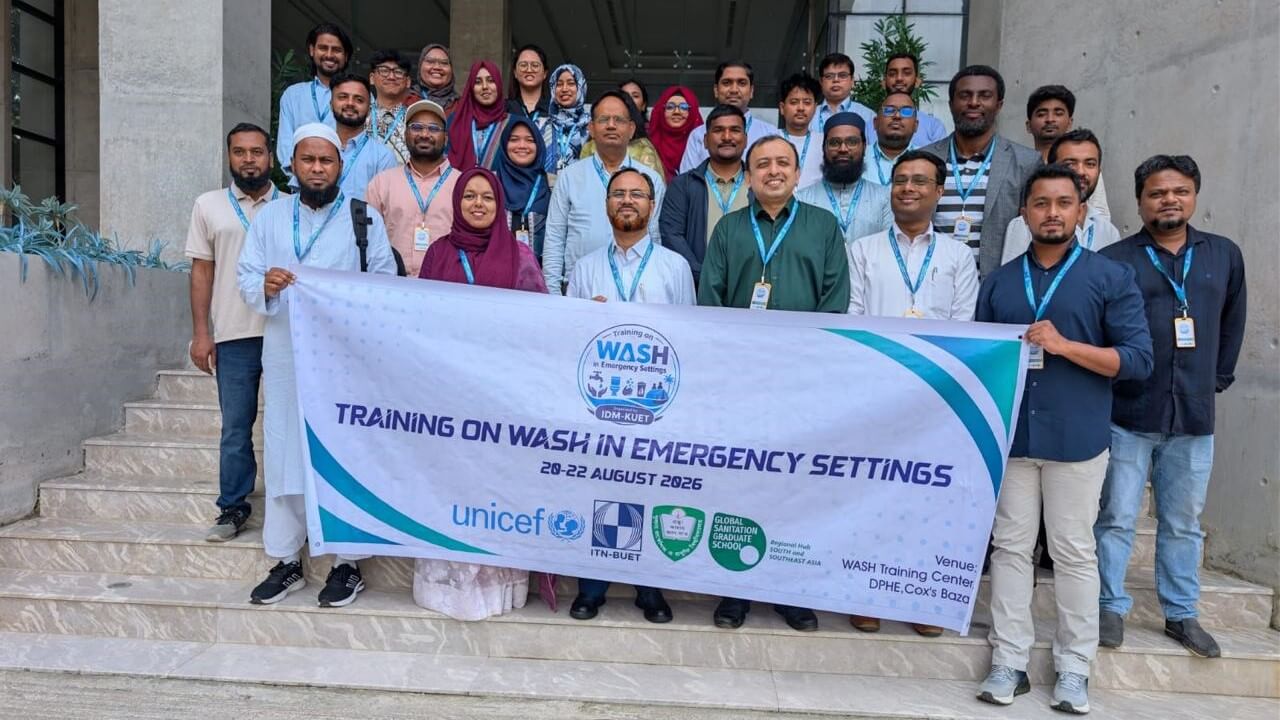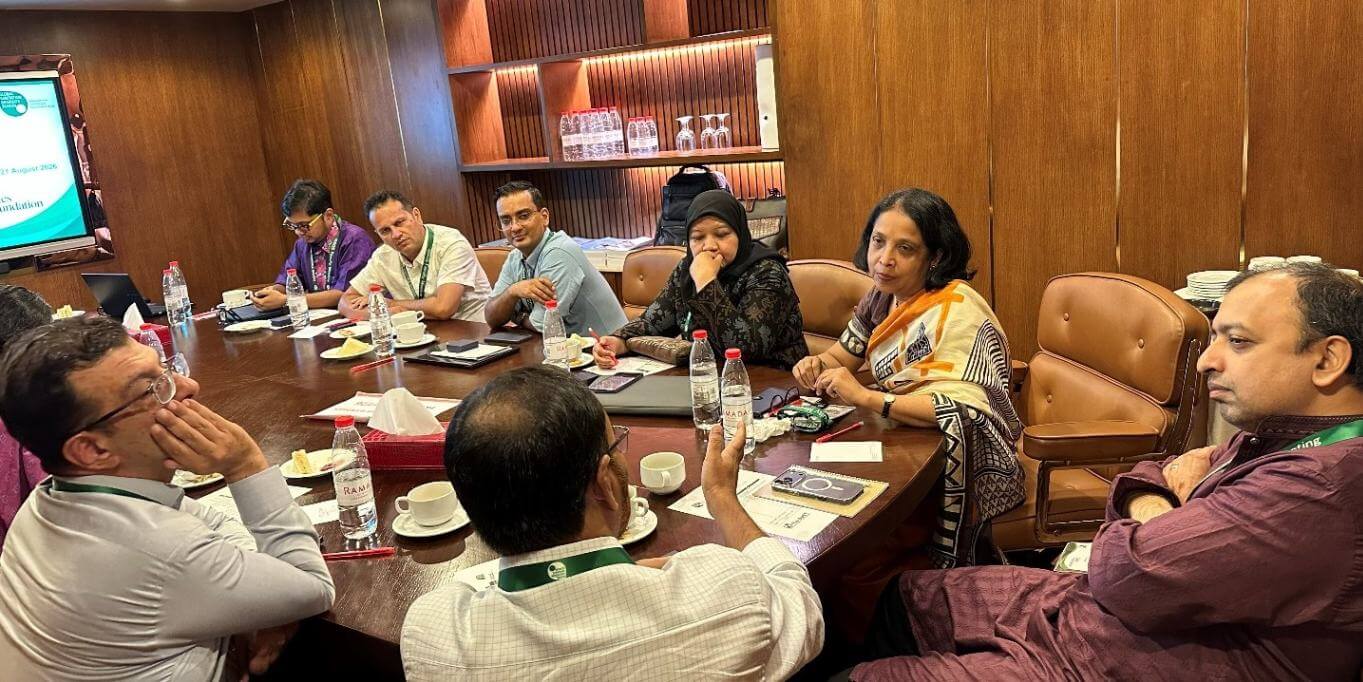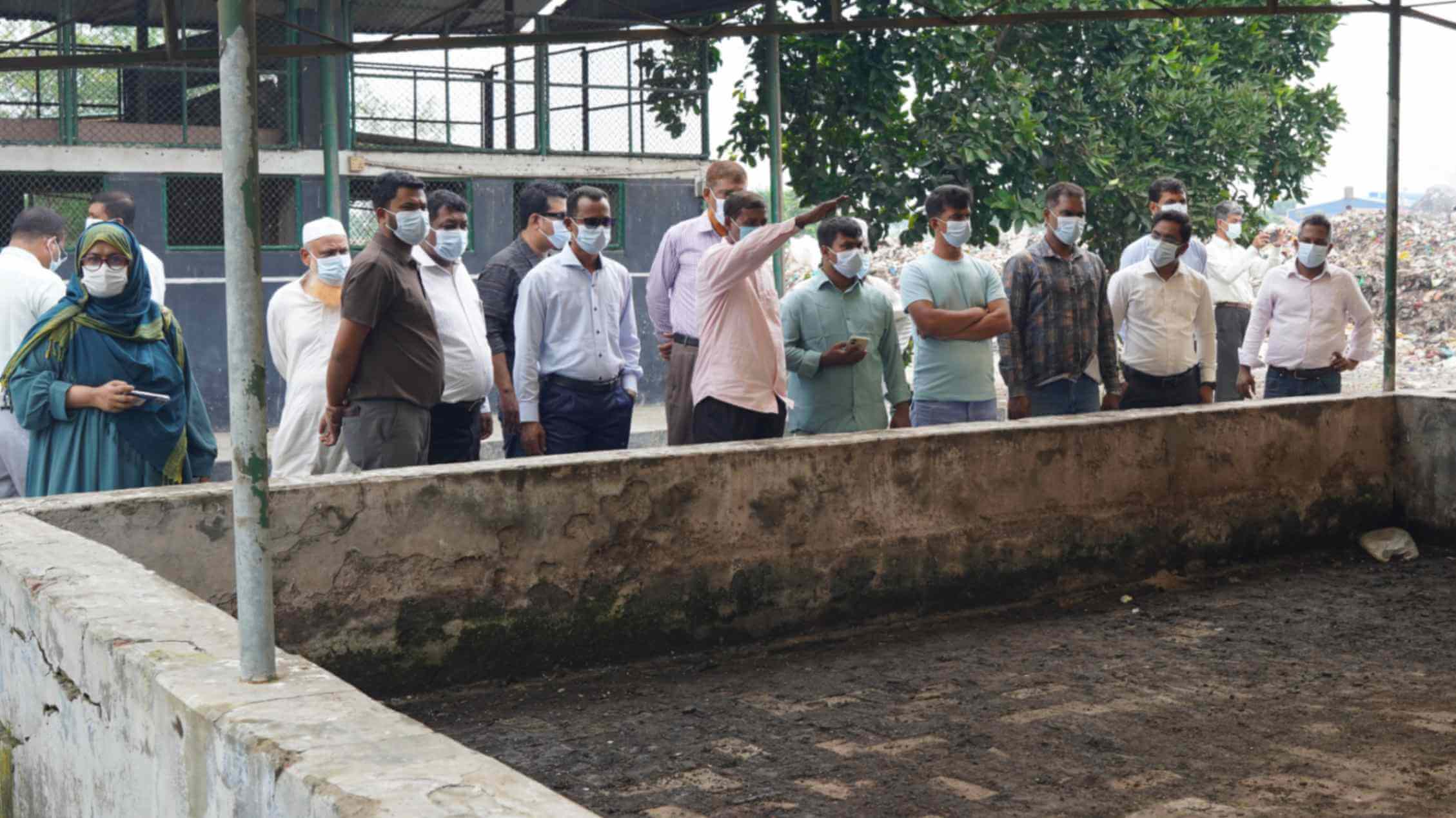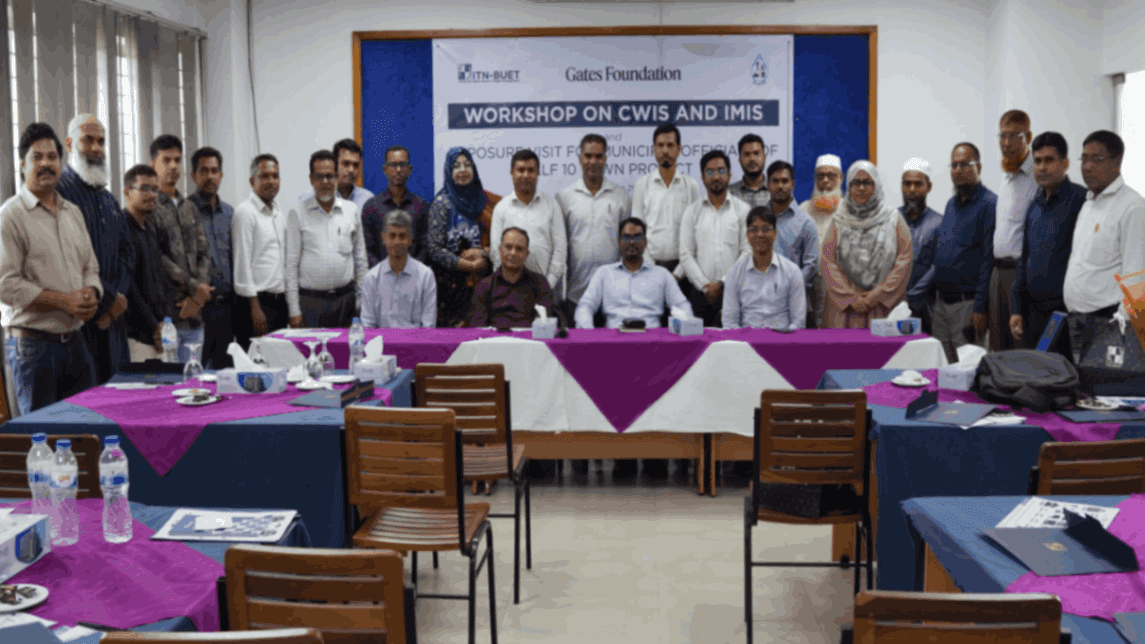

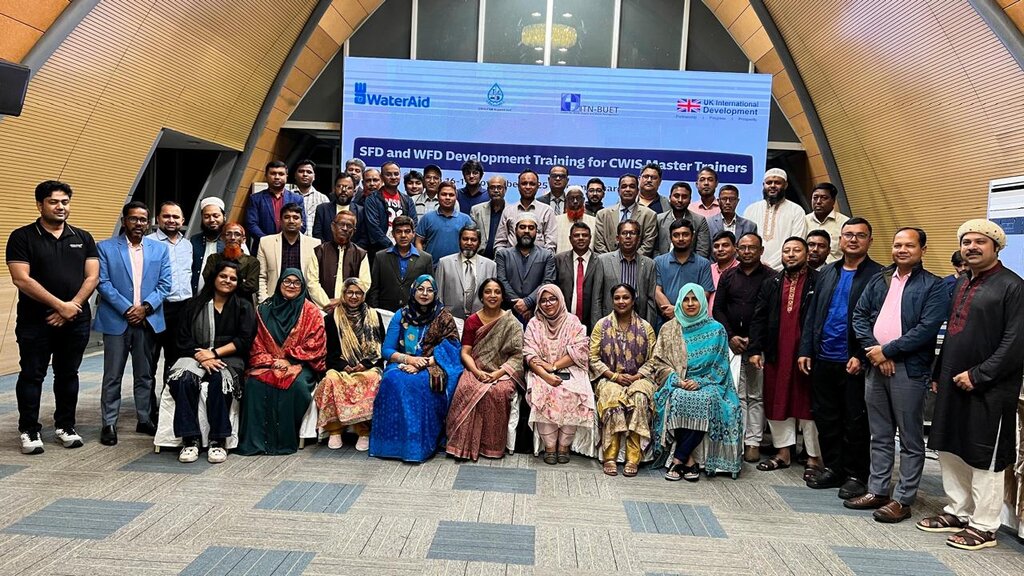
A four-day capacity enhancement workshop for Citywide Inclusive Sanitation (CWIS) master trainers was jointly organized by ITN-BUET, WaterAid Bangladesh, and the CWIS-FSM Support Cell from 16 to 19 November 2025 at Dream Square, Gazipur. A total of 39 master trainers from 37 municipalities participated in the intensive training, demonstrating strong municipal commitment to evidence-based sanitation planning.
The primary objective of the workshop was to strengthen the technical capacity of master trainers on Shit Flow Diagrams (SFD) and Waste Flow Diagrams (WFD)—two essential diagnostic tools for understanding sanitation flows and identifying gaps in safely managed sanitation services.
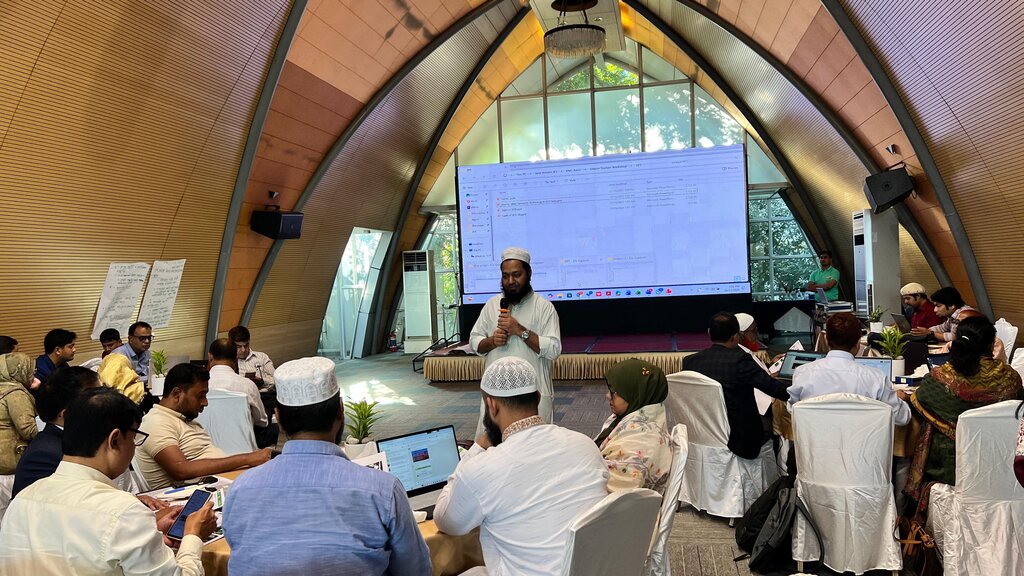
ITN-BUET led the hands-on sessions on SFD preparation, while WaterAid Bangladesh facilitated WFD training, enabling participants to assess faecal sludge and solid waste streams in an integrated manner.
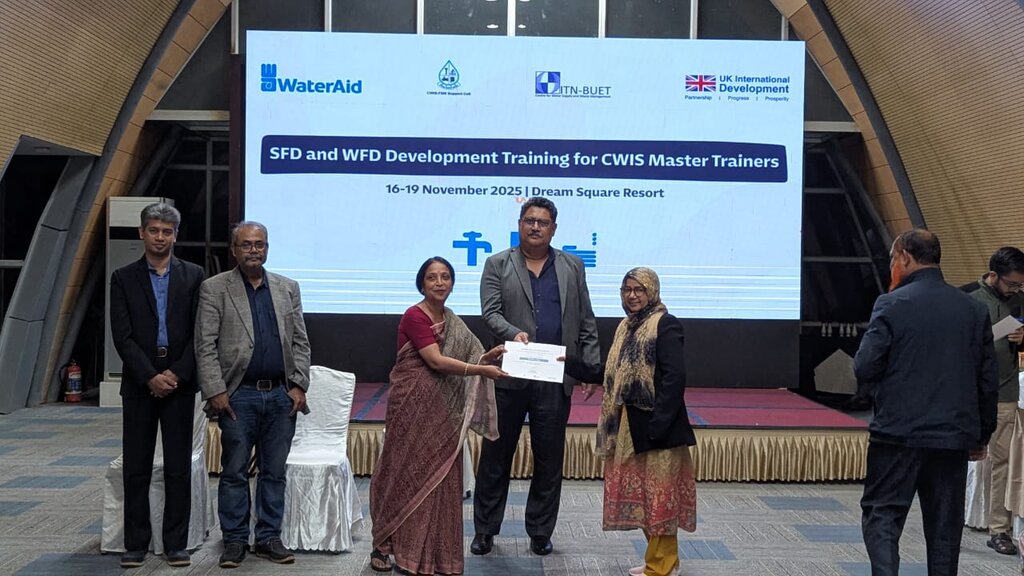
The opening ceremony was attended by Abdullah-al-Muyeed, COO of the CWIS-FSM Support Cell, and Partha Hefaz Sheikh, Director – Policy and Advocacy at WaterAid Bangladesh, who emphasized the importance of data-driven sanitation governance. On the final day, celebrated as World Toilet Day, Dr. Rowshan Mamtaz, Director of ITN-BUET, and Alauddin Ahmed, Project Manager of ITN-BUET, joined the closing and certificate-giving ceremony, recognizing the trainers’ dedication.
Key Findings and Insights
Throughout the sessions, participants gained several important insights:
- Many municipalities still lack updated sanitation data, making SFD/WFD essential for planning improvements.
- Trainers noted that SFD helps visualize service gaps—particularly unsafe containment, emptying practices, and treatment challenges—supporting targeted municipal action.
- The WFD sessions highlighted the interconnectedness between solid waste and faecal sludge management, especially in dense settlements.
- The exercises revealed that while some municipalities show progress in FSM infrastructure, gaps remain in household containment quality and service regulation.
Participants appreciated the practical training and emphasized the need for standardized templates, peer learning, and continuous coaching to refine their diagrams.
Commitment and Path Forward
At the conclusion of the workshop, all master trainers committed to preparing SFDs and WFDs for their respective municipalities within the coming months. They also agreed to work closely with WaterAid and the CWIS-FSM Support Cell to ensure that the finalized diagrams are uploaded to relevant national and global platforms, enhancing visibility and supporting informed policymaking.
The organizers shared their plan to:
- Provide follow-up mentoring sessions (online and in-person).
- Develop a repository of good-quality SFDs/WFDs for benchmarking.
- Support municipalities in integrating SFD/WFD findings into annual planning and budget proposals.
- Explore the introduction of digital tools to streamline data collection and visualization.
The workshop concluded with a renewed commitment to strengthening sanitation governance in Bangladesh. By equipping master trainers with the right tools and skills, the initiative marks a meaningful step toward achieving safe, inclusive, and sustainable sanitation services for all.