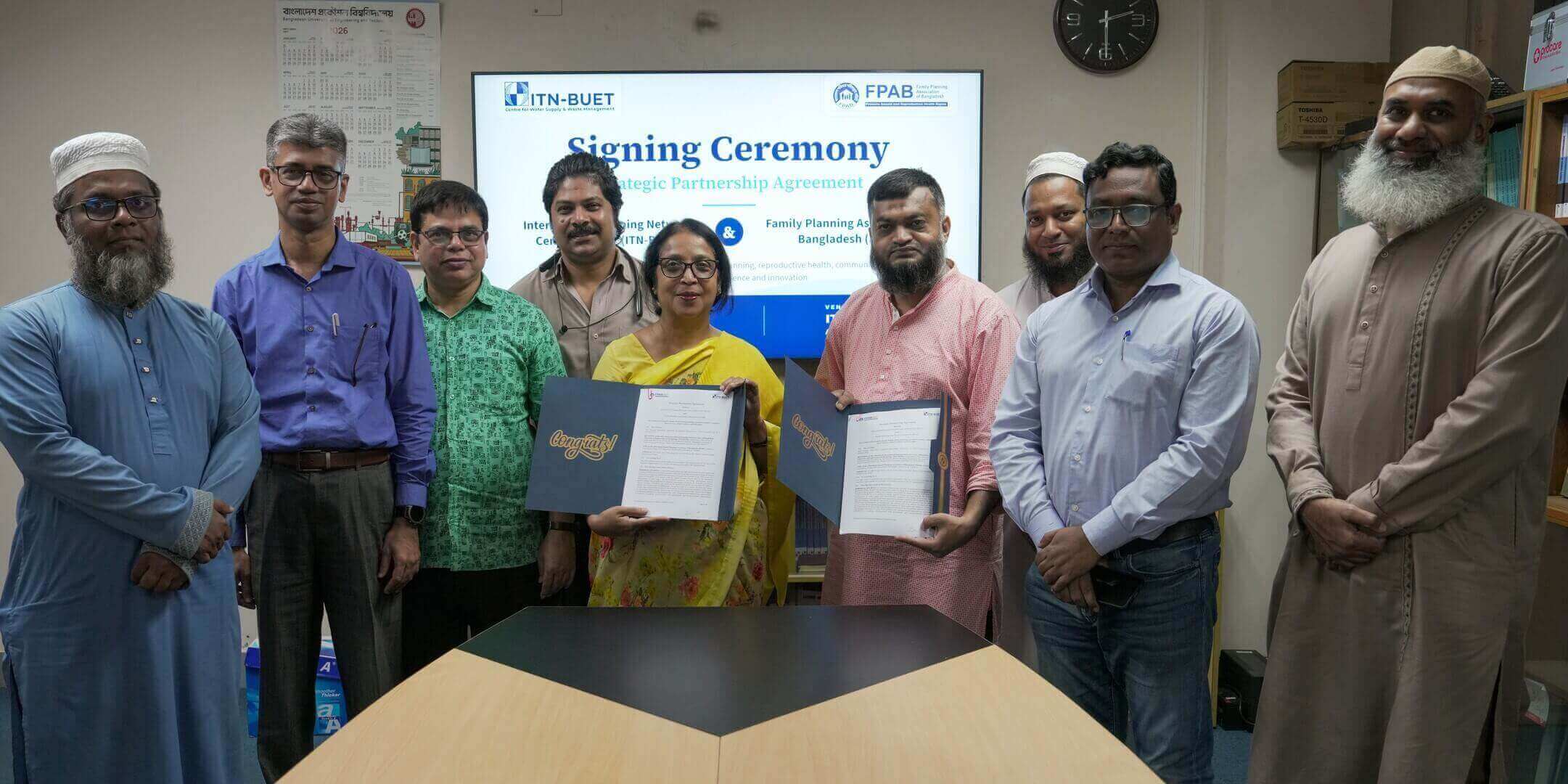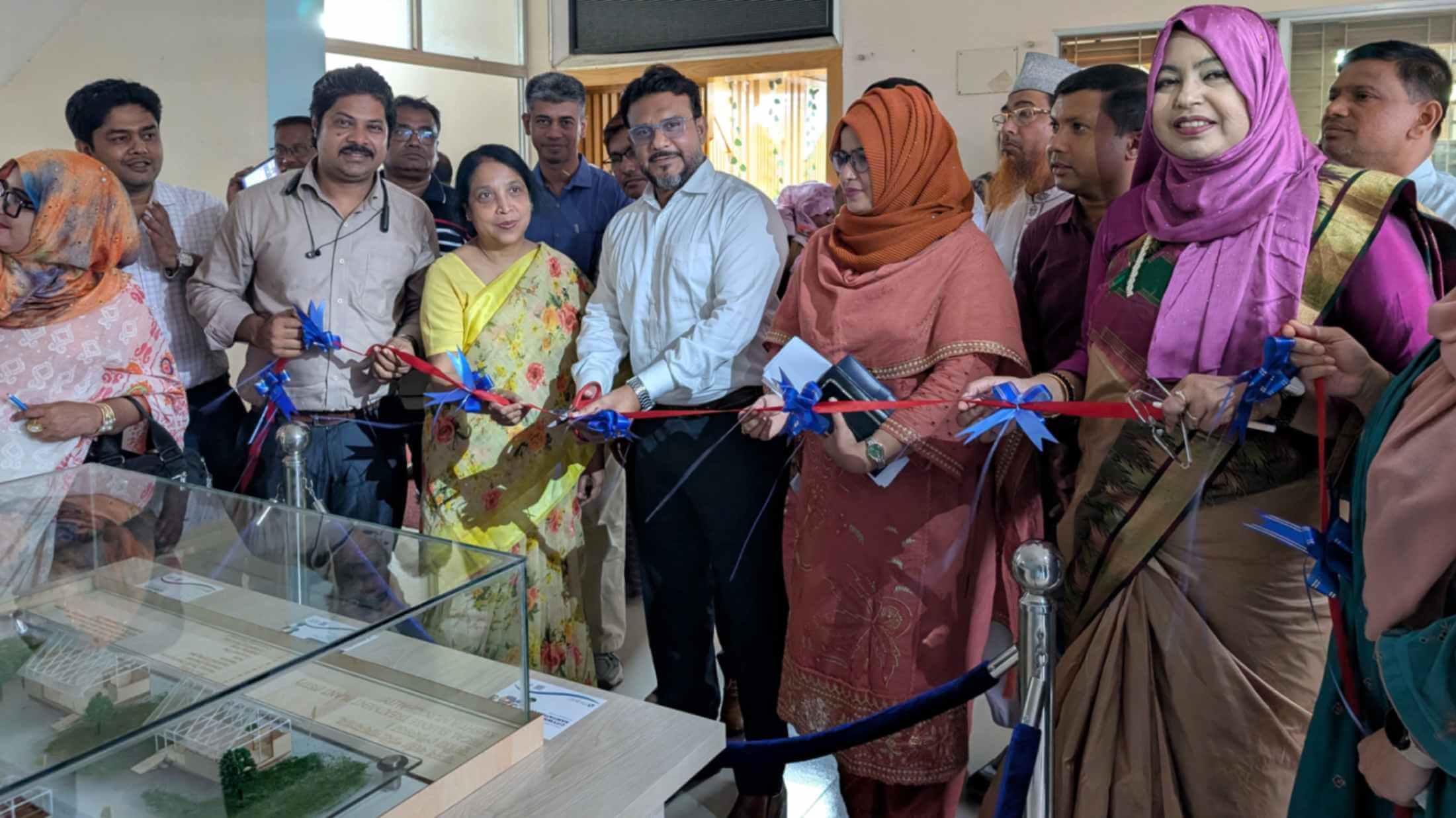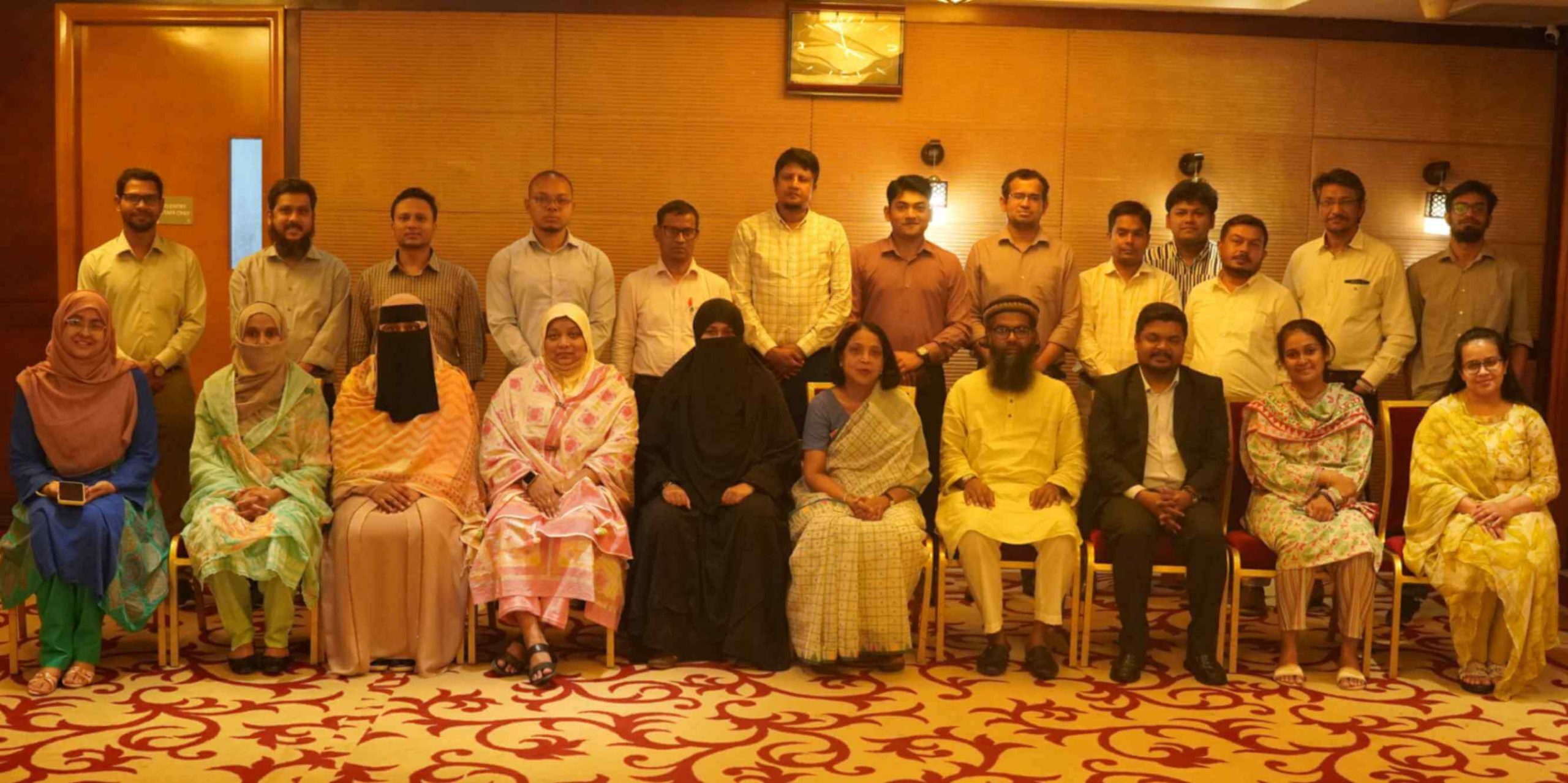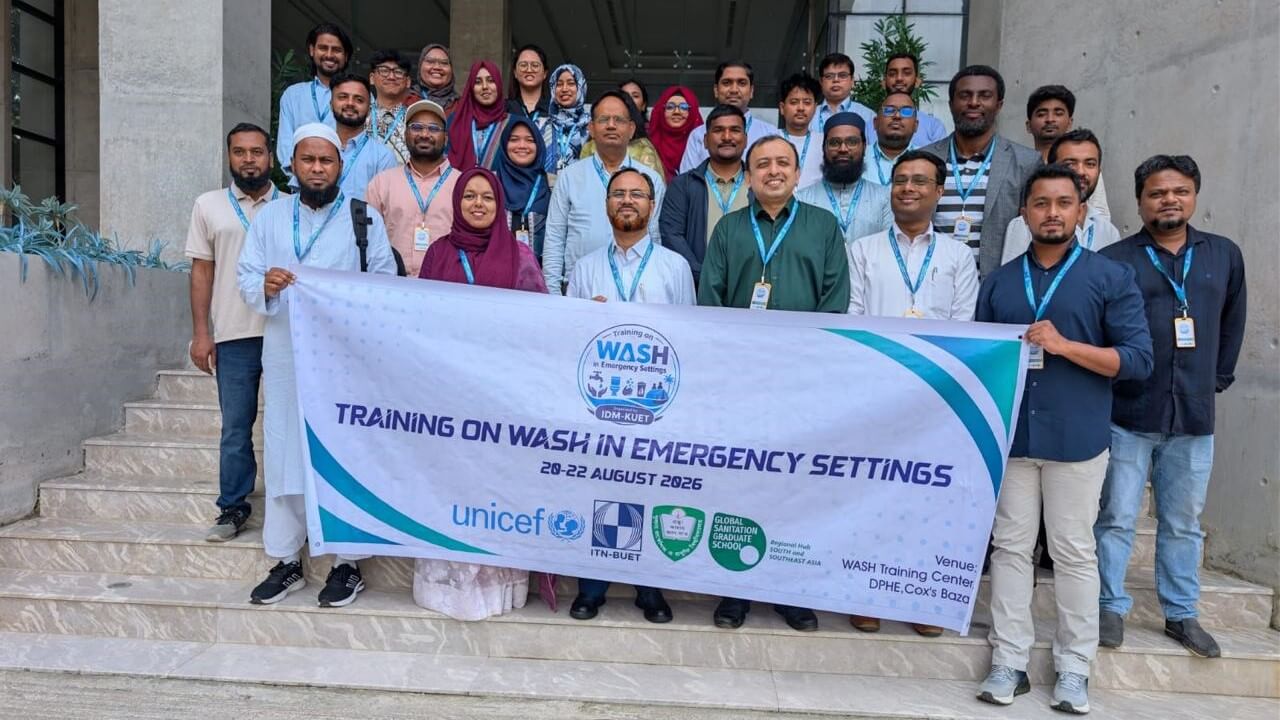

Being the first element of sanitation service chain, sanitation containment systems are critical for ensuring safely managed sanitation. However, several studies in Bangladesh indicate that most containment systems are poorly designed and constructed, contributing to environmental pollution, groundwater contamination and significant public health risks. In this backdrop, ITN-BUET organized a two-day training on “Design, Construction and Improvement of Sanitation Containment Systems” on 26–27 April 2026 to strengthen the technical capacity of engineers and WASH professionals.
The training brought together 15 participants from City Corporation, Department of Public Health Engineering (DPHE), Norwegian Refugee Council, CEGIS, WaterAid Bangladesh, Médecins Sans Frontières (MSF), Palli Karma Sahayak Foundation (PKSF), Bhumijo, Inspira Advisory and Consulting Ltd and DevConsultants Limited. The course covered key areas including design and construction of septic tank and pit latrines, innovative and climate-resilient toilet/containment technologies and system upgrading approaches through interactive and hands-on learning sessions.
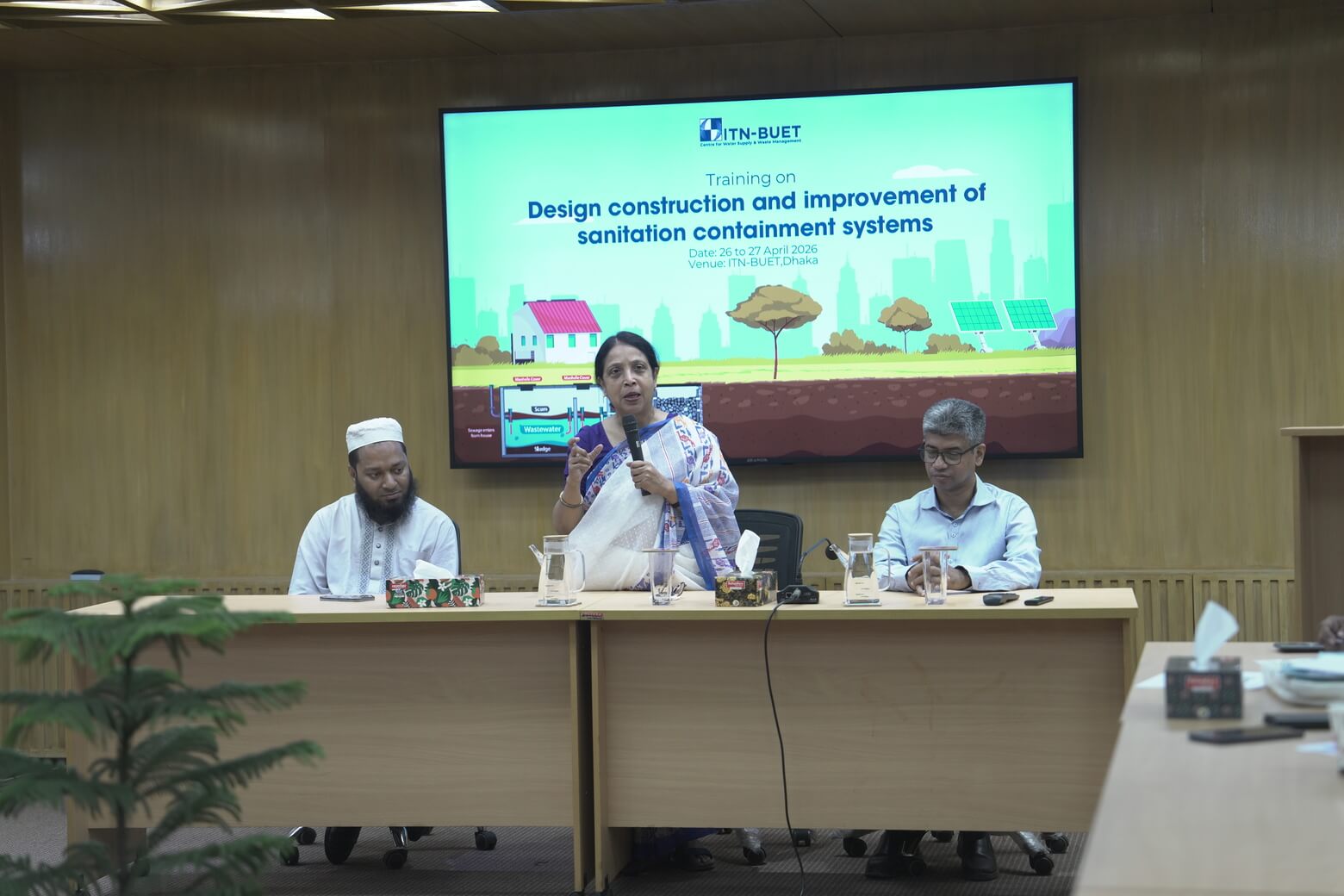
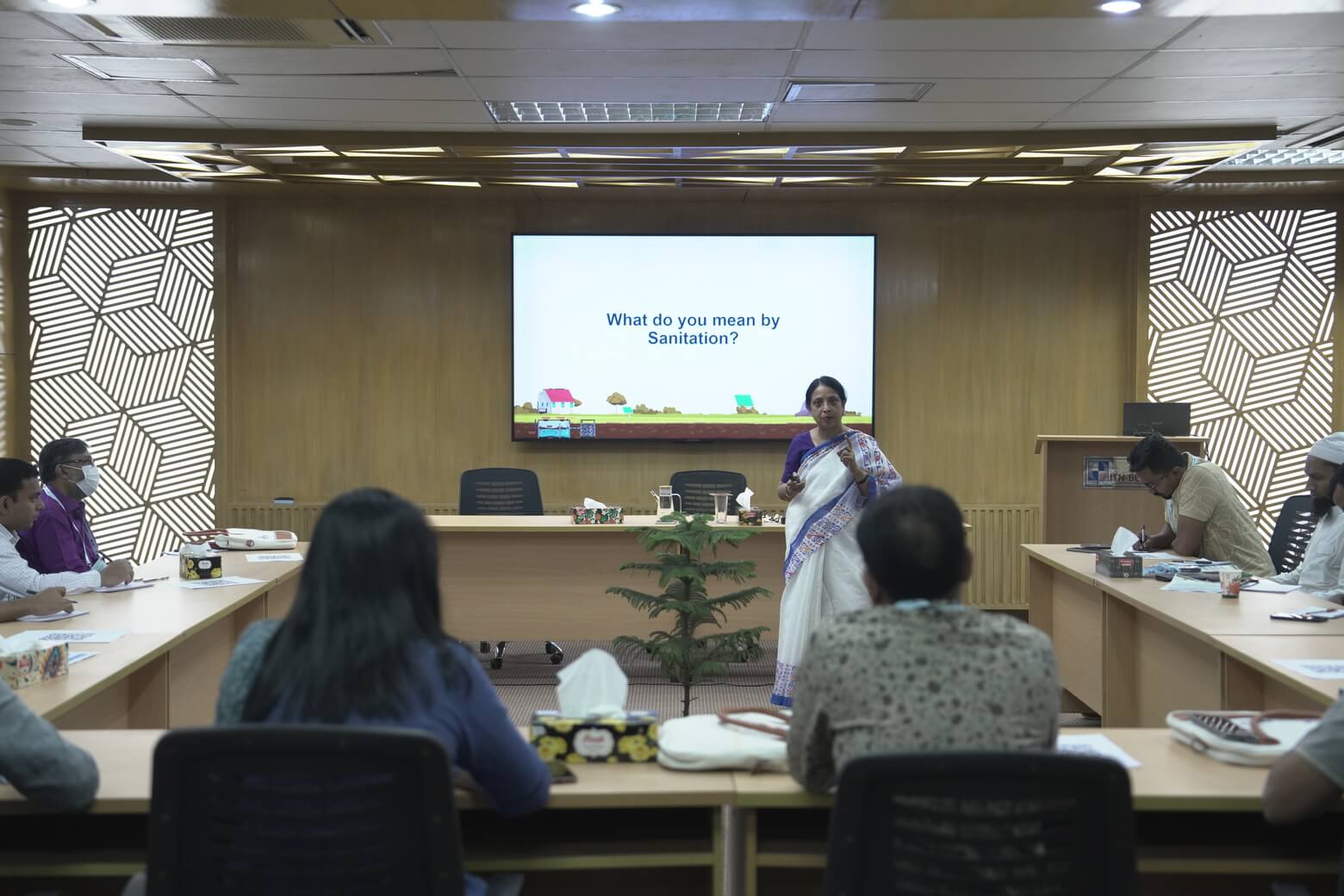
The training featured technical sessions led by experts from ITN-BUET, DPHE, and experienced WASH professionals. Prof. Dr. Rowshan Mamtaz, Professor at Bangladesh University of Engineering and Technology and Director of ITN-BUET, highlighted the critical role of sanitation containment systems in preventing environmental pollution and protecting public health. Mr. Azizur Rahman, Research Officer at ITN-BUET, conducted sessions on the design of septic tank systems and Biofill toilets, while Ms. Faria Tasnim, Training Specialist at ITN-BUET, delivered a session on pit latrine design. Mohammad Arif Hossain, WASH professional, discussed step-by-step construction practices for septic tanks and pit latrines. A.H.M Khalequr Rahman, Superintending Engineer at DPHE, shared insights on resilient and inclusive sanitation solutions. The session on containment system improvement technologies was delivered by Alauddin Ahmed, Project Manager at ITN-BUET.
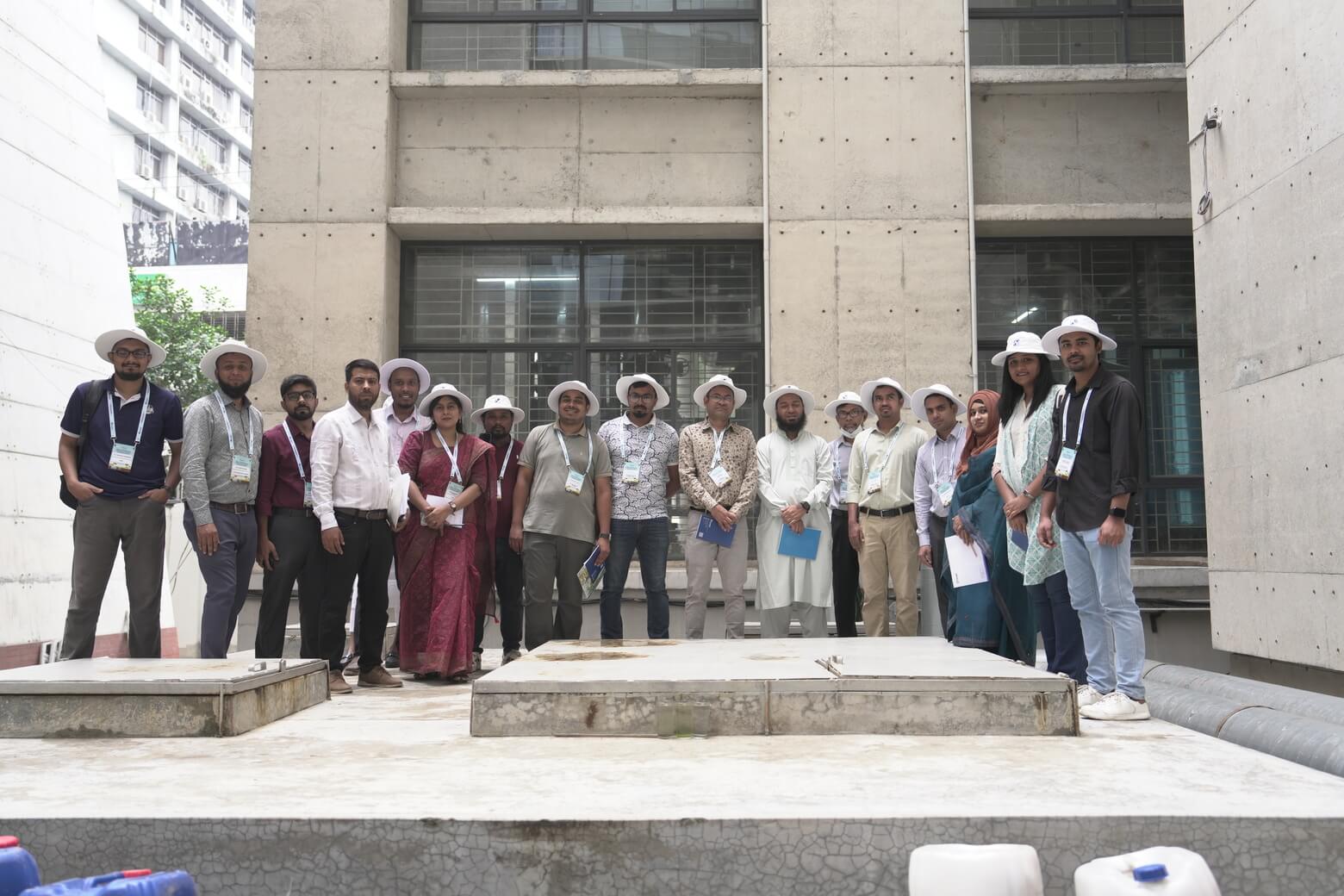
As part of the practical learning component, participants visited the Bangladesh Secretariat premises in Segunbagicha, Dhaka, where they observed advanced wastewater treatment facilities based on Membrane Bioreactor (MBR) technology. The visit was facilitated by Mr. Tanjil Islam, Subdivisional Engineer, Public Works Department, along with officials from Charms Limited, who shared practical insights on system design, operation and performance.
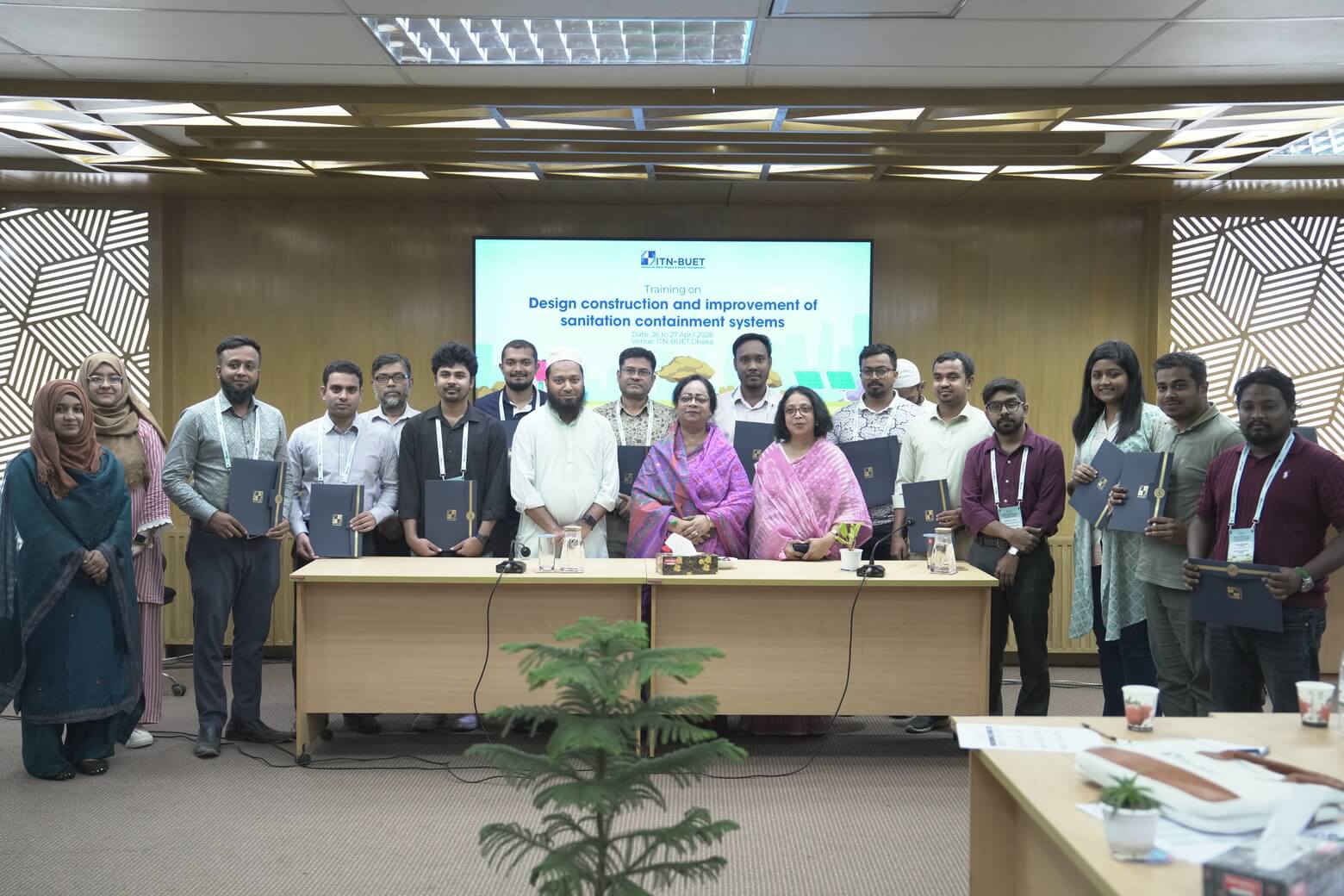
The training concluded with a closing session graced by the Honorable Administrator of Barishal City Corporation, Advocate Bilkis Akter Jahan Shirin, as Chief Guest. She appreciated the initiative and encouraged the participants to apply the knowledge in their respective institutions. She also assured that the participant from Barishal City Corporation would further disseminate the learning by orienting fellow engineers upon returning to the City Corporation, creating a multiplier effect to strengthen in-house technical capacity and ensure sustained application of the knowledge at the local level.
The participants appreciated the training methodology, particularly the structured technical guidance on design, construction cost estimation, and climate-resilient sanitation solutions. Ms. Tunisha Kuri, Senior Technical Officer at BRAC, said, “Although we have been working in the field, the detailed calculations and the rationale for selecting different design parameters were previously unclear to us. However, this training has helped clarify these aspects significantly.”
Overall, the training demonstrated strong potential in developing a skilled workforce capable of addressing Bangladesh’s sanitation challenges and advancing safely managed sanitation across the country.