

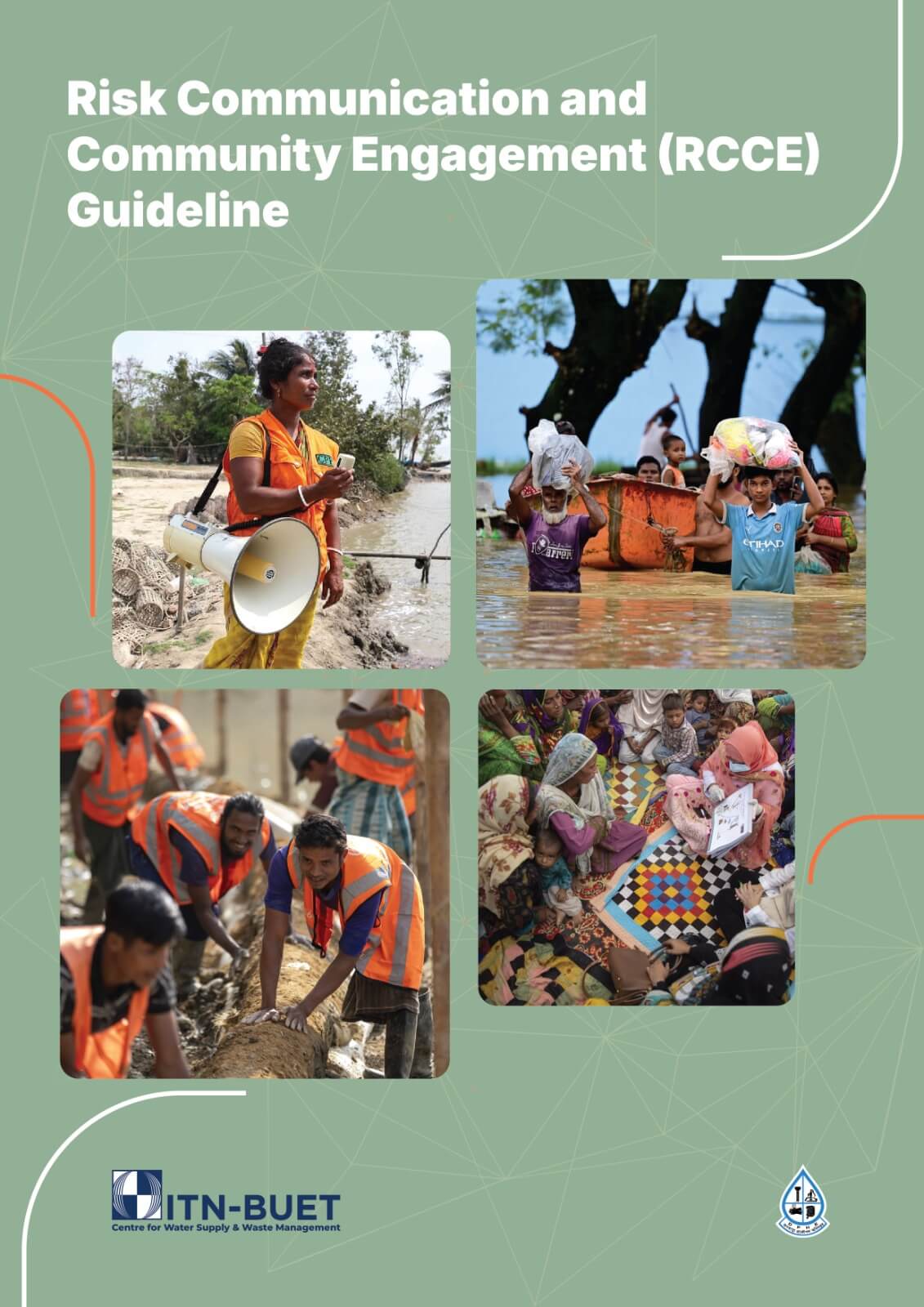
RCCE is a proactive two-way communication and repetitive interaction between professionals and affected communities regarding a hazard that may turn into a disaster. RCCE increases effective prevention and control behaviors and actions in normal time to a disaster emergency, maybe a health hazard or crisis of safe drinking water during flood and storm-surge. RCCE enhances the capacity of the public and local government officials to impart messages to the communities as well as equips the populations of disaster-prone and climate vulnerable areas to make wise decisions during normal time, during emergencies and during post-disaster period to safeguard them from impacts of risk and hazards and assist to improve the environment. According to World Health Organization (WHO) risk communication is the real-time exchange of information, advice, and opinions between experts or officials and people who encounter an imminent danger (hazard) to their survival, health, or economic or social wellbeing. Community engagement is also described as a process of developing and motivating relationships that enable stakeholders to work together to address health-related issues and promote wellbeing to achieve positive health impact and outcomes. The capacity of the office bearers of Department of Public Health and Engineering (DPHE) and urban Local Government Institutions (LGIs), that is City Corporation and Pourasava, for providing safe drinking water, safely managed sanitation, and hygiene (WASH), and related services for faecal sludge and waste management (FSWM) can be enhanced as well coverage of these services can be increased
and improved by adopting and implementation of a proper Risk Communication and Community Engagement (RCCE) Guidelines. Generally, risk communication offers an opportunity for exchange of information between the officials and the community facilitating community realizing the risk and potential disaster and getting involvement in decision-making. It contributes to the development of trust and a positive working relationship between the officials and the community. Thus, RCCE combines the skills and viewpoints of communities and responders.
