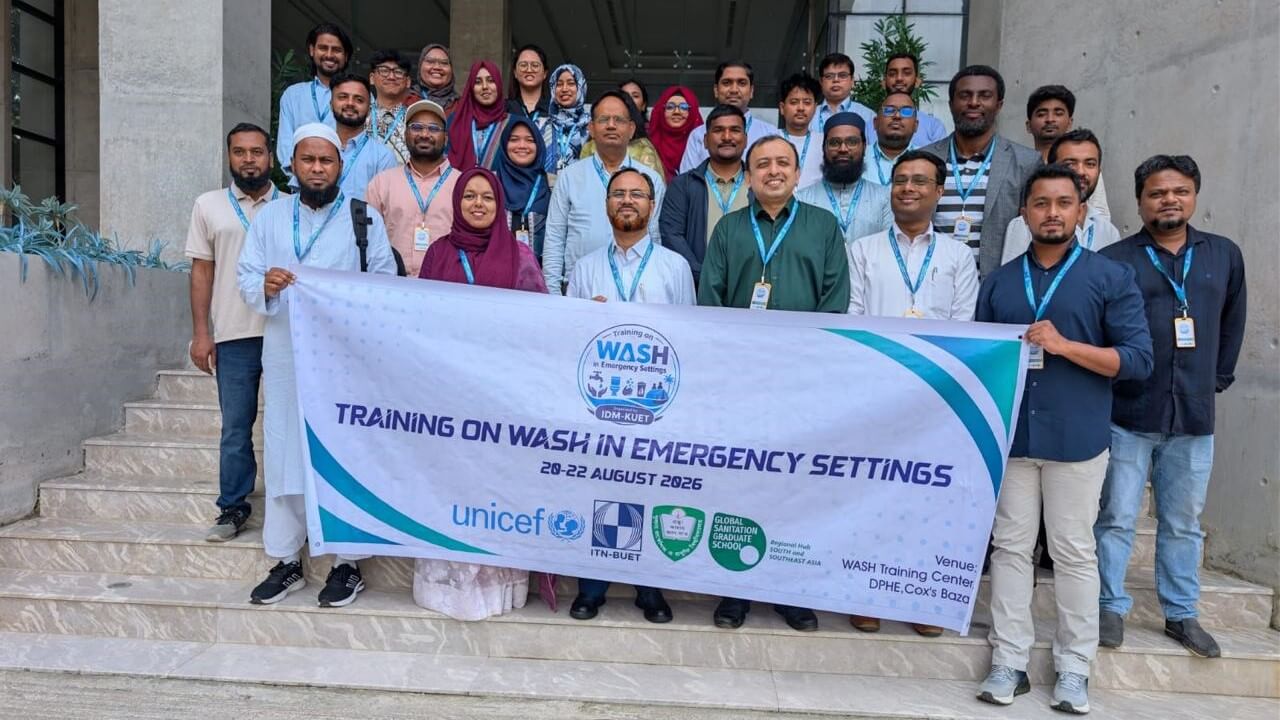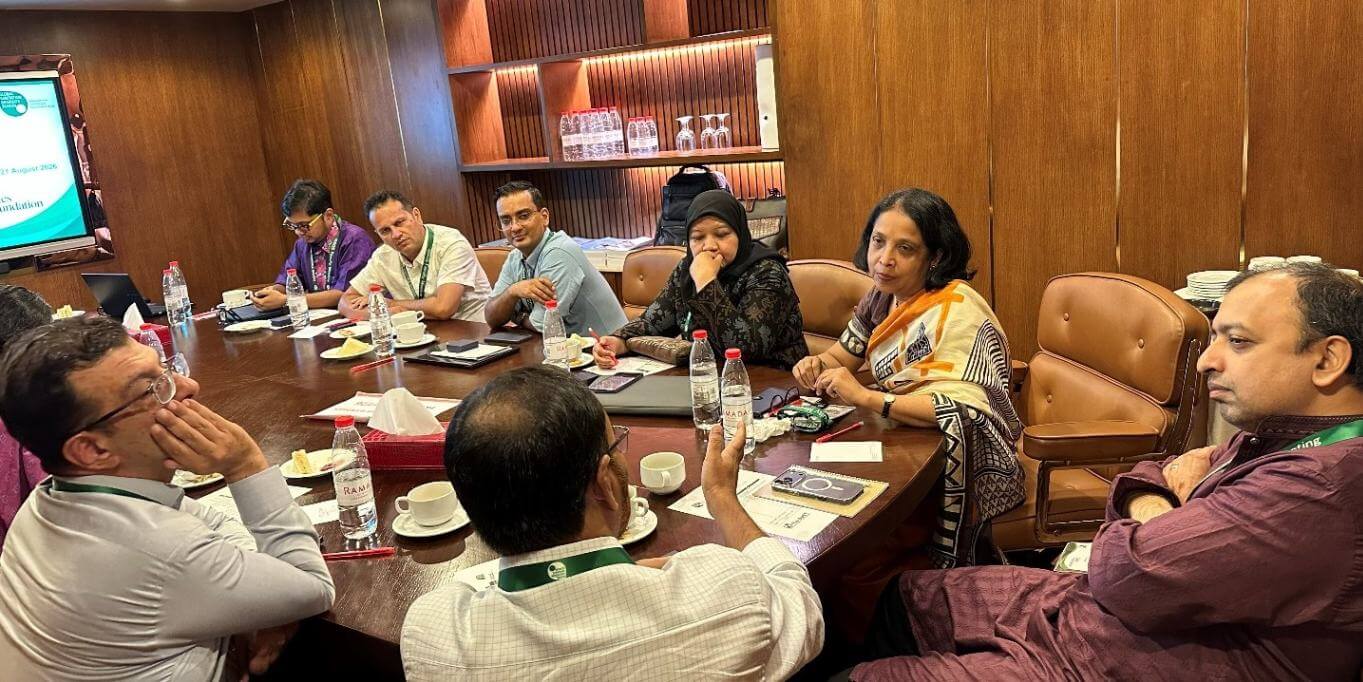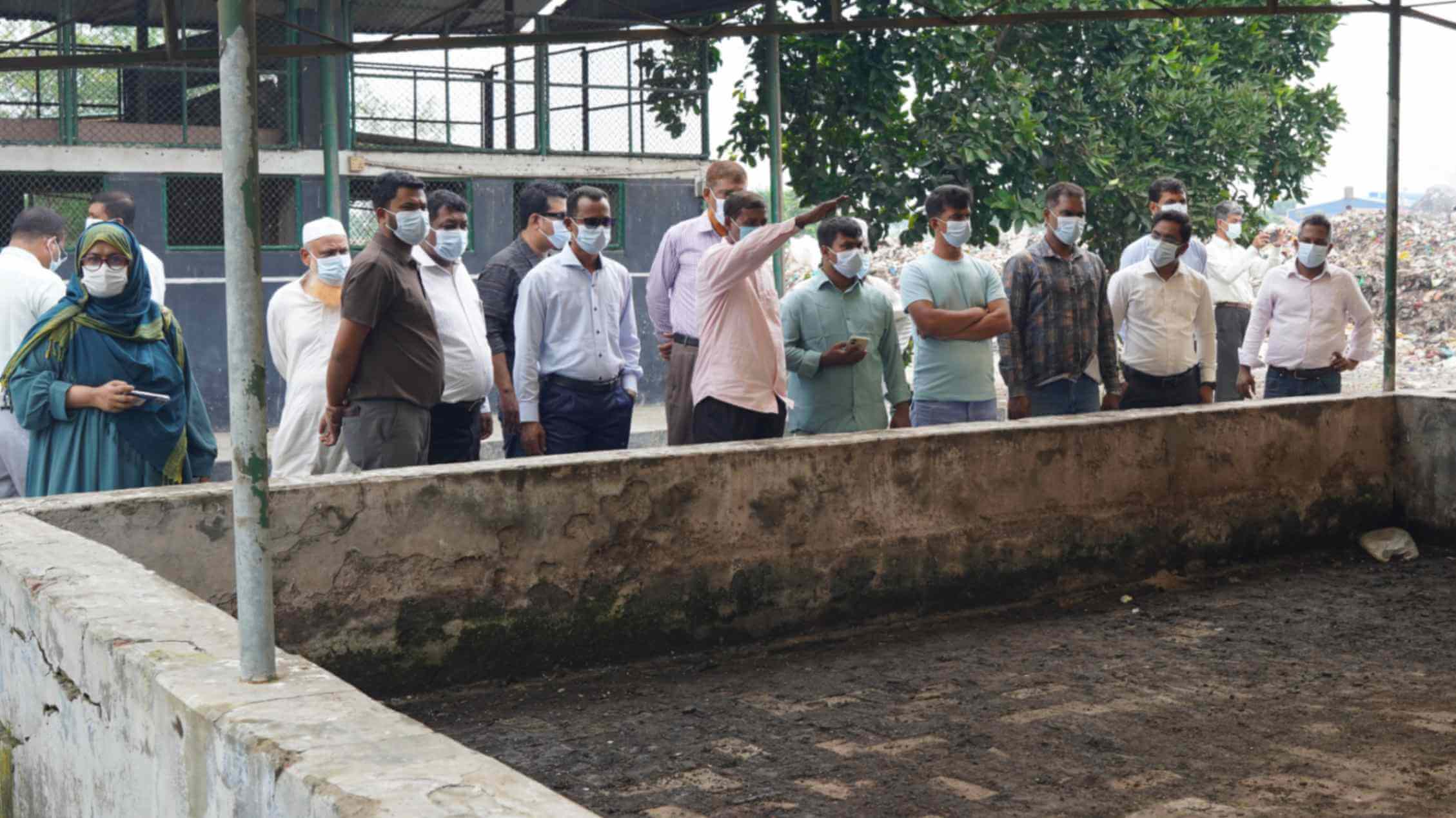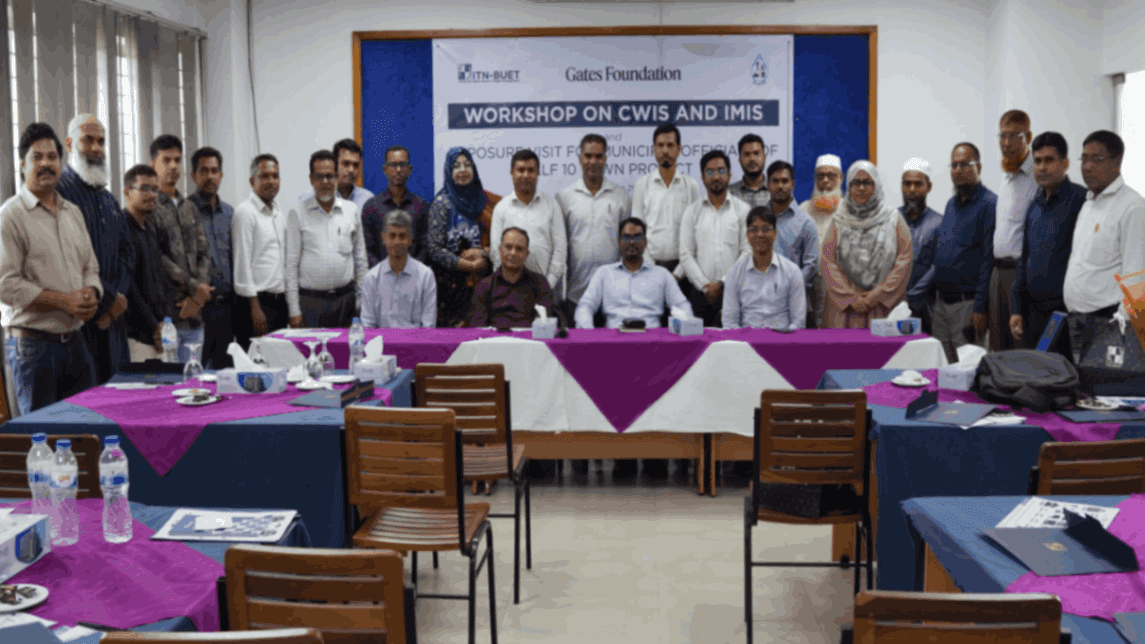

A Planning Workshop on the Implementation of the Capacity Building Component for the 10 Towns Project was jointly organized by ITN-BUET and the Project Management Unit (PMU) of the Inclusive and Integrated Sanitation and Hygiene Project in 10 Priority Towns in Bangladesh, DPHE on 4 January 2026. The workshop brought together the key stakeholders to collaboratively plan and refine the strategy for implementing capacity building and awareness activities under the project.
The workshop commenced with an inaugural ceremony where Mr. Habibur Rahman, WASH Specialist, Islamic Development Bank (IsDB), outlined the objectives of the workshop and highlighted the critical role of strategic capacity building in achieving sustainable sanitation outcomes. Mr. Shamim Ahmed, Project Director of the 10 Priority Towns Project, provided an overview of the project’s vision, emphasizing the need for a well-coordinated and results-oriented capacity building and awareness program. Dr. Rowshan Mamtaz, Director, ITN-BUET, reaffirmed ITN-BUET’s commitment to support DPHE and municipalities in individual and institutional capacity building through evidence-based learning.
A comprehensive presentation from the Project Management Unit (PMU) was delivered by Ms. Dilruba Farzana, Deputy Project Director, highlighting ongoing project activities and expectations from the proposed capacity building and awareness interventions to support effective service delivery at the local level.
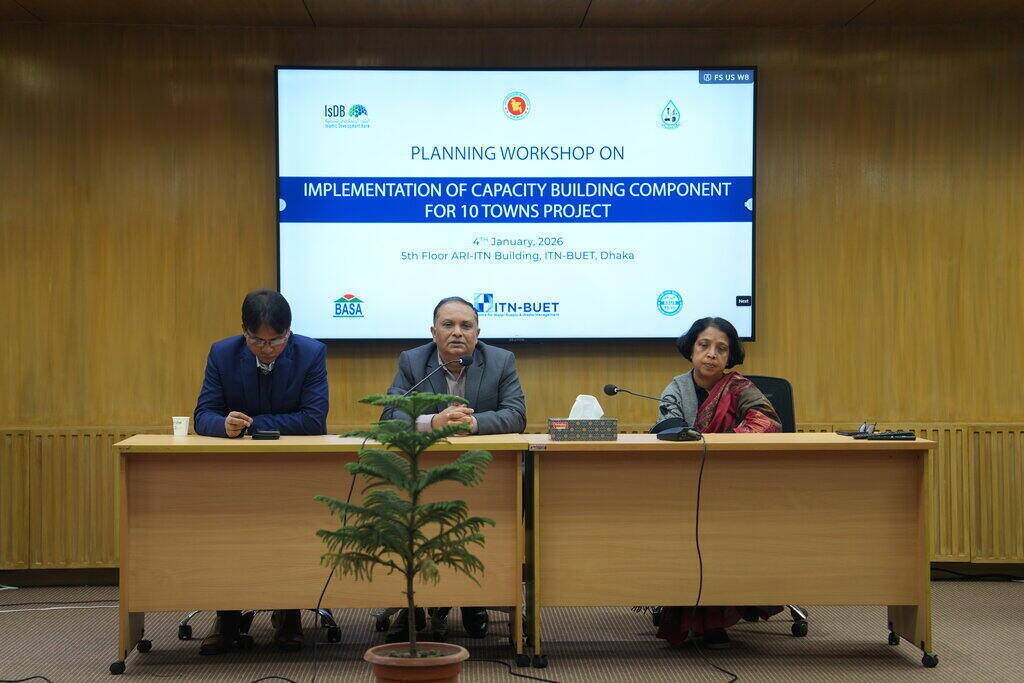
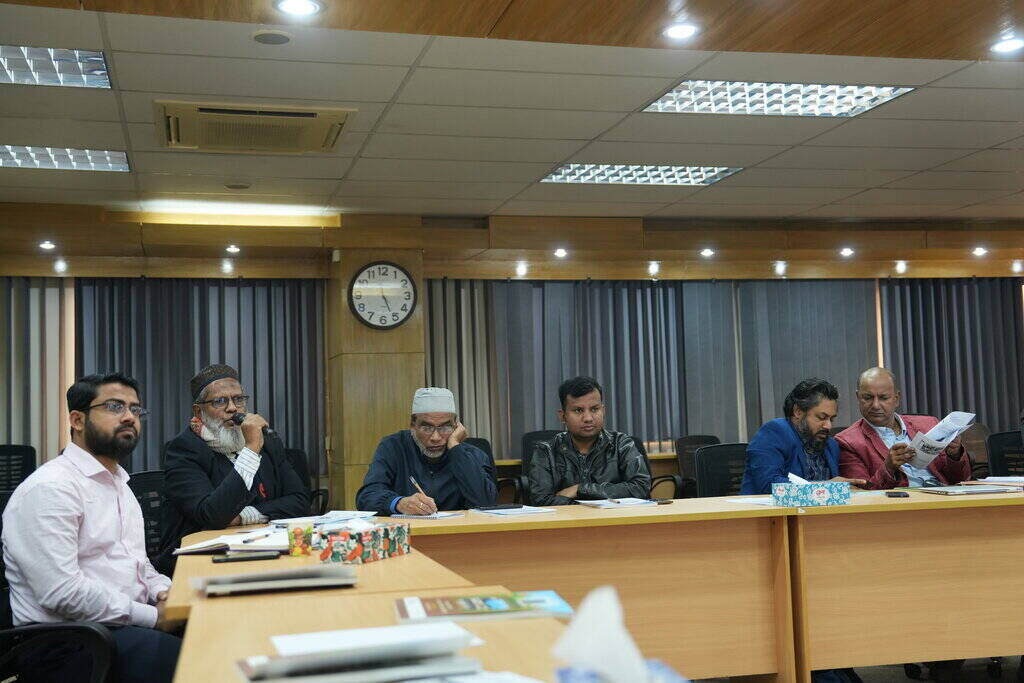
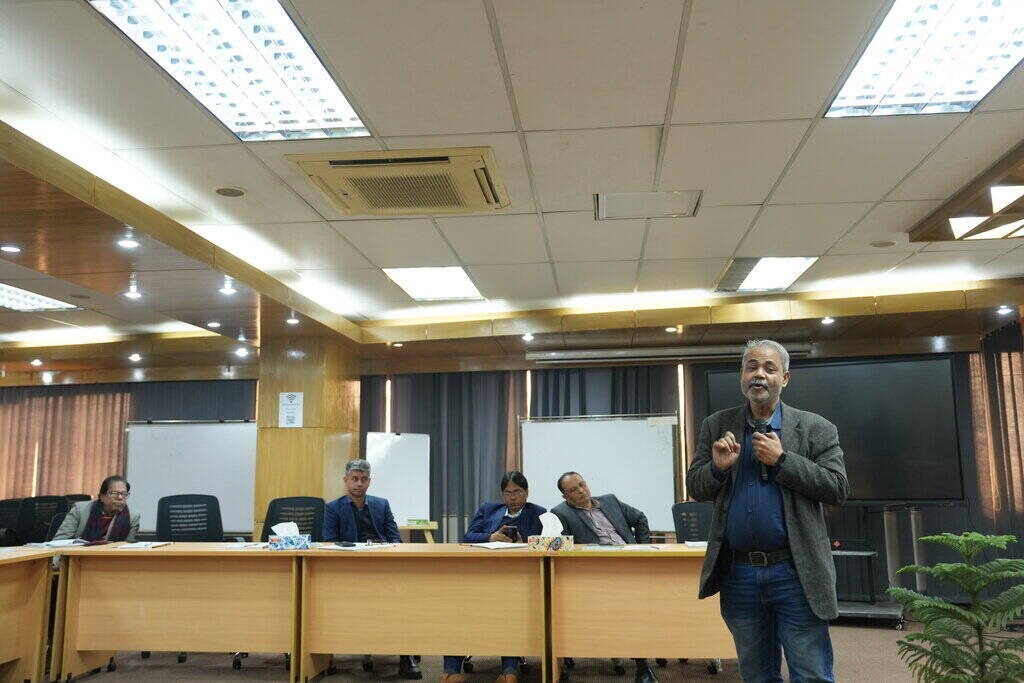
Subsequently, the proposed capacity building and awareness approach for the project was presented by Mr. Ashraful Awal from Swabalambi Samaj Unnayan Sangstha (SSUS), serving as consultant of the project. Drawing on reflections from recent visits to three project cities, the presentation emphasized the importance of tailoring training content to local contexts, addressing real operational challenges, and adopting practical, hands-on learning methods.
Ms. Faria Tasnim, Training Specialist, ITN-BUET, presented an overview of ITN-BUET’s existing capacity building and awareness packages, sharing key lessons and best practices from completed training programs. The session highlighted the opportunities to adapt and upscale existing resources and approaches to meet the specific needs of the 10 Towns Project.
An engaging technical discussion was moderated by Mr. Kazi Amin, Knowledge Management Specialist, ITN-BUET, focusing on the development of context-specific capacity building packages and refinement of the workplan. Mr. Alauddin Ahmed provided feedback on identifying priority areas, avoiding duplication and ensuring coherence between capacity building outcomes and project objectives. Mr. Habibur Rahman recommended aligning the capacity building and awareness strategy closely with project activities and interventions, while Mr. Sanjoy Mukherjee, Social Development Expert, CWIS-FSM Support Cell, emphasized the need for a thorough review of previous needs assessments to further fine-tune the workplan.
The workshop concluded with a shared understanding of the identified capacity gaps and a clear direction for moving forward, marking an important step toward developing a coordinated, effective, and locally grounded capacity building and awareness program to strengthen sanitation service delivery across the ten project towns.