
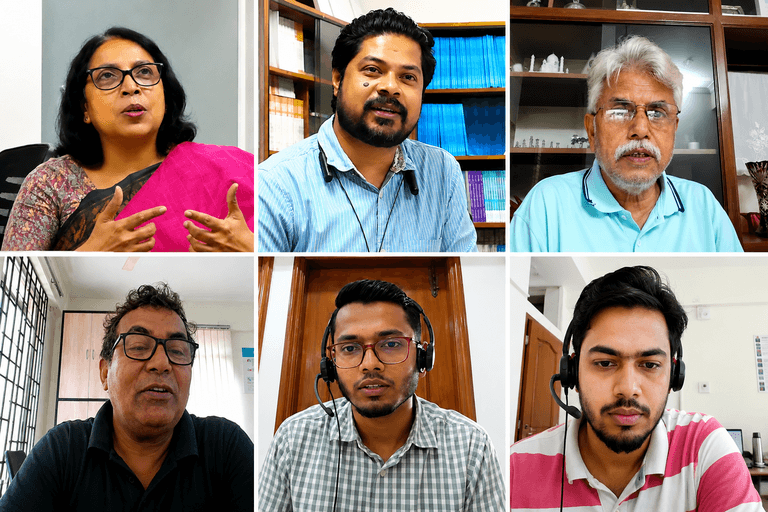
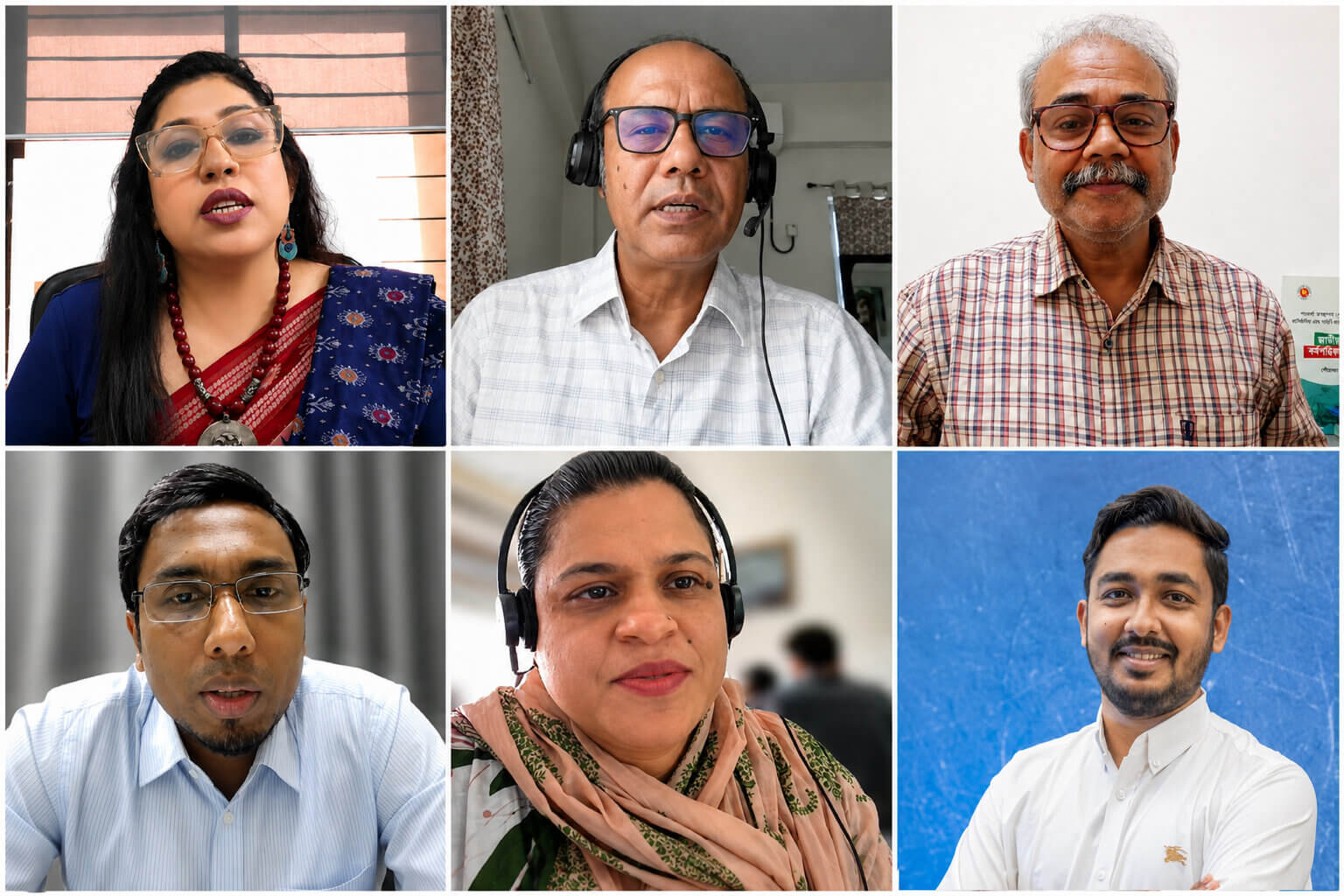
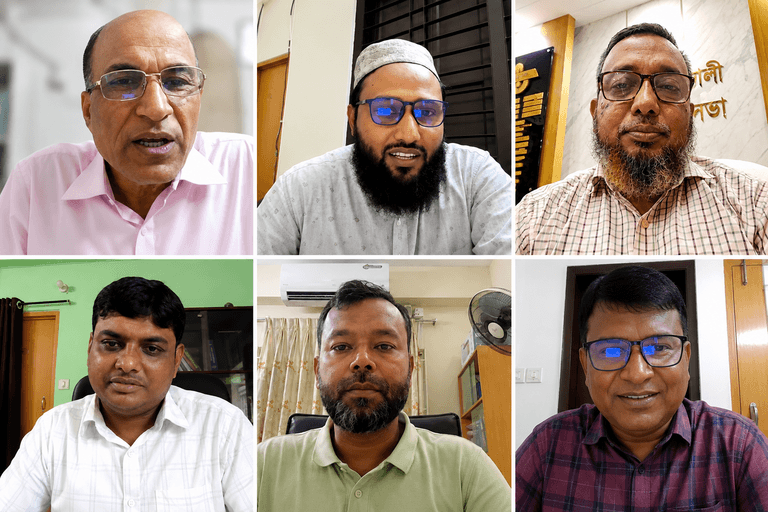
The sixth session of SaniTalk Café, jointly organized by ITN-BUET and the Bangladesh FSM Network, was held online on 24 June 2026 under the theme “From Budget to Service Delivery: Understanding Municipal Sanitation Financing Gaps in Bangladesh.” The session brought together more than 40 participants from municipalities, city corporations, government agencies, academia, NGOs, private sector operators, and development partners to discuss municipal sanitation financing and identify practical solutions for strengthening service delivery.
Participants included representatives from Kushtia, Faridpur, Lakshmipur, Jhenaidah, Sakhipur, Kalaroa, Lalmonirhat, and Rajbari municipalities, as well as Cumilla, Sylhet, and Chattogram City Corporations, alongside organizations including DPHE, WaterAid Bangladesh, WSUP, Practical Action Bangladesh, SNV, BASA Foundation, FINISH-Mondial Bangladesh, B-Scan, VERC, and Space.
The session was moderated by Professor Dr. Rowshan Mamtaz, Director of ITN-BUET, who emphasized the importance of strengthening dialogue and collaboration to address municipal sanitation financing challenges. Delivering the welcome remarks, Ms. Ishrat Shabnam, Country Director of Practical Action Bangladesh, highlighted the need for stronger partnerships, institutional coordination, and knowledge sharing to improve sanitation budget planning and implementation.
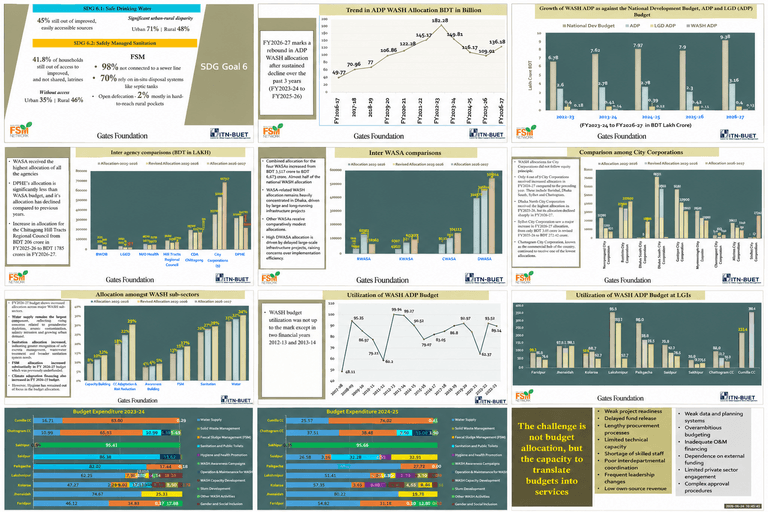
A technical presentation by Kazi Amin, Knowledge Management Specialist at ITN-BUET, provided an overview of Bangladesh’s WASH financing landscape, highlighting trends in budget allocation, expenditure, and implementation. The presentation noted that while WASH investments have increased, significant disparities remain across municipalities and sub-sectors. Average WASH budget utilization stands at approximately 74 percent, suggesting that strengthening institutional capacity is as important as increasing financial allocations. Despite its critical role in achieving Citywide Inclusive Sanitation (CWIS), fecal sludge management (FSM) continues to receive comparatively limited financial investment.
During the interactive discussion, participants identified several challenges affecting municipal sanitation financing and service delivery, including gaps between budget allocation and implementation, limited technical capacity, inadequate operation and maintenance financing, weak budget-tracking systems, staff shortages, and delays in procurement and fund disbursement. Participants also emphasized the need for integrated planning, stronger coordination among government agencies, and greater municipal capacity to ensure that sanitation investments respond to local priorities and translate into sustainable services.
The session concluded with recommendations to adopt a Medium-Term Budgetary Framework (MTBF), strengthen budget-tracking systems, increase investment in FSM, enhance municipal technical capacity, and promote evidence-based planning. Participants further called for greater coordination among government institutions, development partners, and the private sector to improve long-term sanitation financing. In her closing remarks, Professor Mamtaz thanked participants for their active engagement and reaffirmed ITN-BUET’s commitment — together with the Bangladesh FSM Network — to supporting municipalities through continued knowledge exchange, capacity development, and multi-stakeholder dialogue in advancing SDG 6 and Citywide Inclusive Sanitation nationwide.
The sixth session of SaniTalk Café reinforced the importance of moving beyond discussions of budget allocation toward a broader focus on effective financing, institutional capacity, and sustainable service delivery. By bringing together a diverse group of stakeholders, the session fostered meaningful dialogue, shared practical experience, and generated actionable recommendations for addressing municipal sanitation financing challenges — insights expected to inform future policy discussions and encourage more strategic investment in sanitation across Bangladesh.