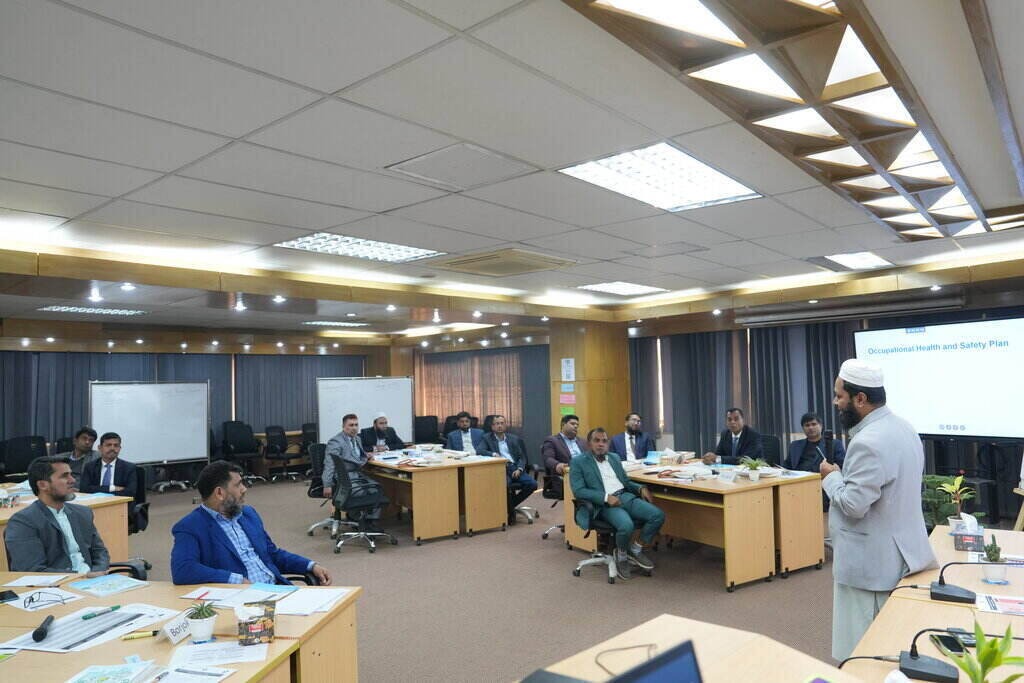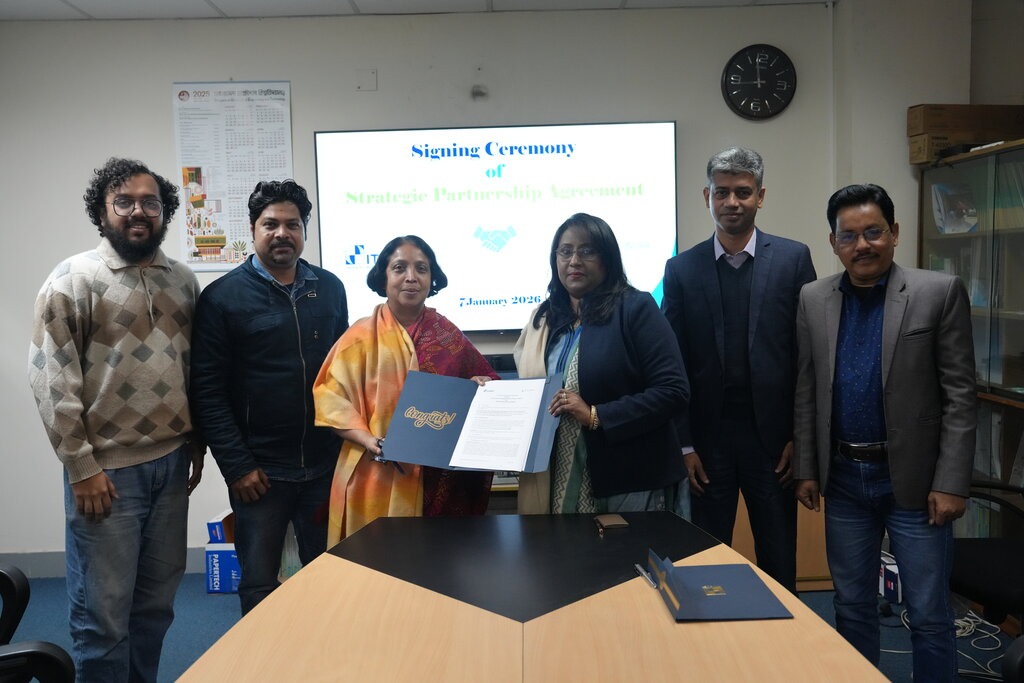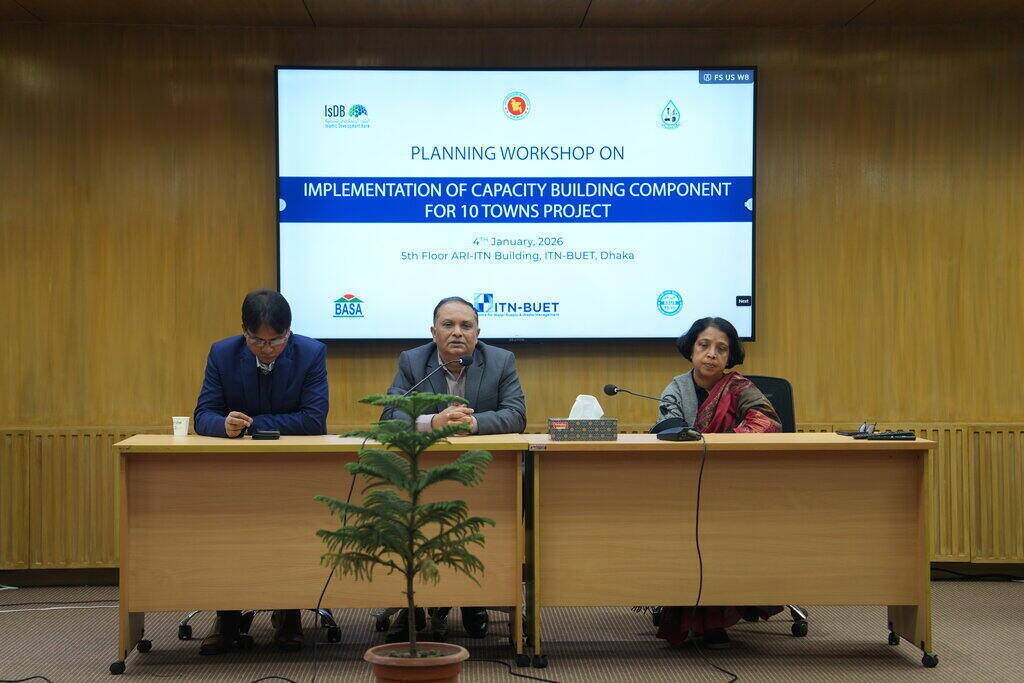

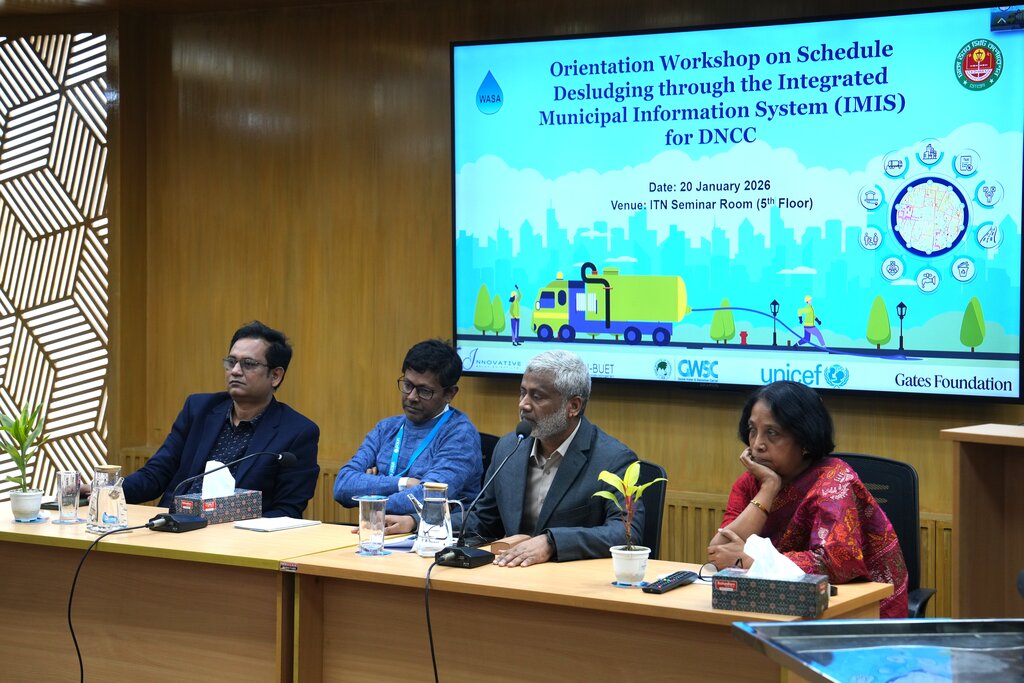
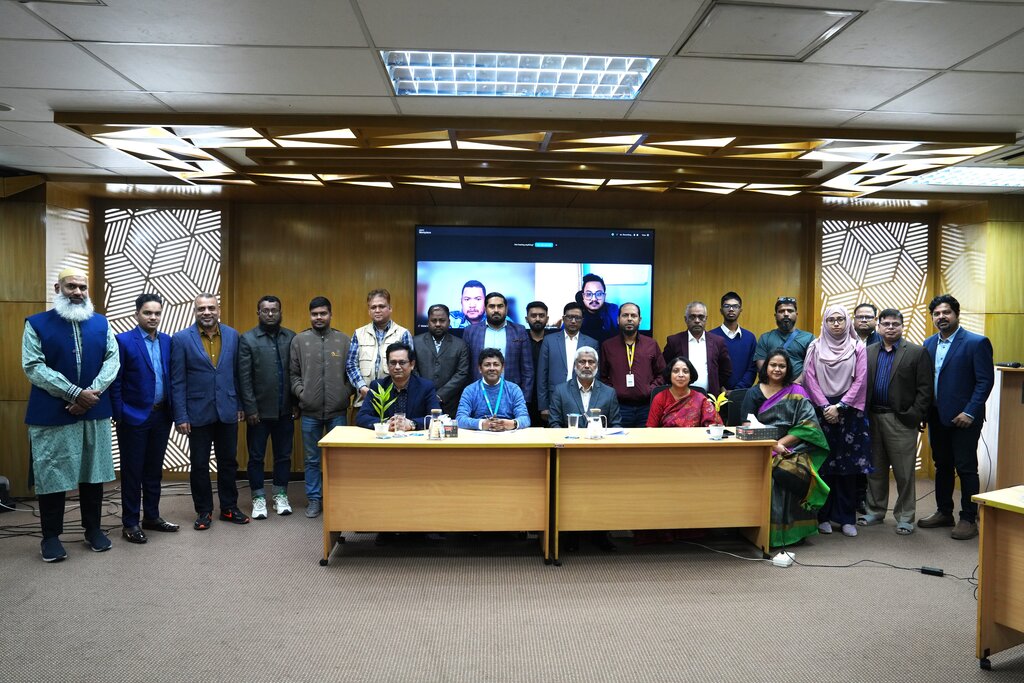
A two-day workshop organized by ITN-BUET, in collaboration with the Global Water & Sanitation Center (GWSC) of AIT and Innovative Solution Pvt. Ltd. (ISPL), has strengthened the capacity of sanitation service providers and municipal staff in Dhaka on IMIS-based Scheduled Desludging. The orientation brought together 21 participants, including 15 private sanitation service providers, DWASA treatment plant operators, and DNCC waste management staff, held on 18 and 20 January 2026 at ITN-BUET.
The workshop began with a focus on safely managed sanitation in Bangladesh, presented by Rakib Uddin Ahmed, Senior Information & Documentation Officer of ITN-BUET. Dipok Chandra Roy, Consultant of the GoB-UNICEF Project, highlighted the use of diaphragm pump technology for desludging in hard-to-reach areas. Maharshi Rajbhandari, Software Engineer at ISPL, introduced the IMIS-driven Scheduled Desludging Module (SDM), demonstrating how GIS-based building and containment databases support citywide desludging schedules. The Integrated Municipal Information System (IMIS) is a versatile system that supports digital management of municipal services. Participants explored the system through live demonstrations and hands-on exercises on both web and mobile platforms.
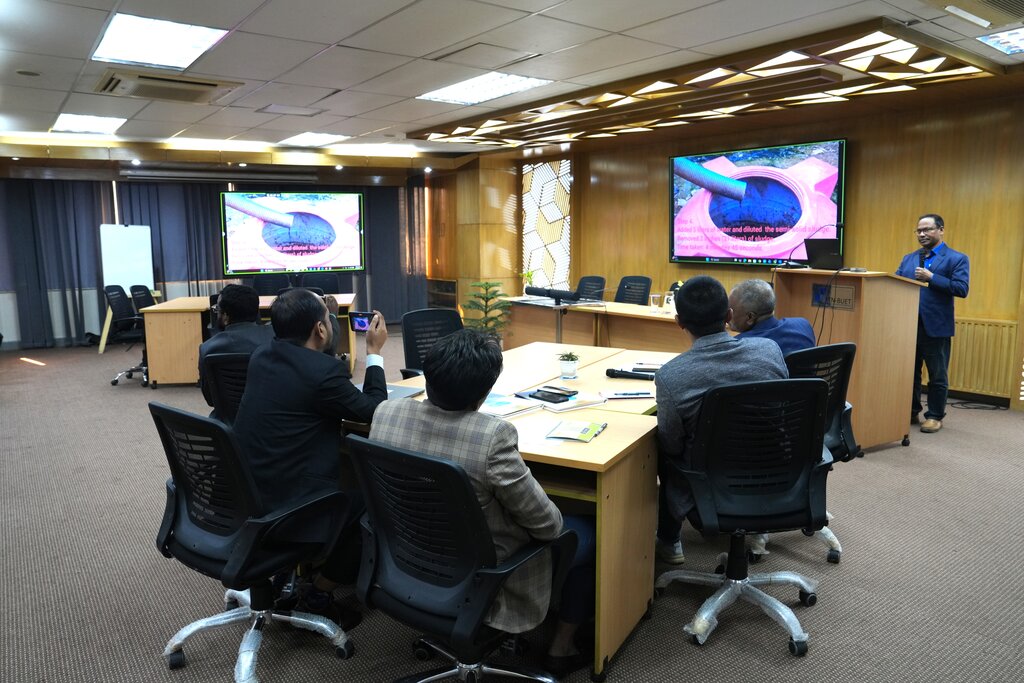
A field visit to desludging operations at the Dasherkandi Sludge Treatment Plant in Aftabnagar offered participants practical insights into IMIS-supported operations. S. M. Anwar Sattar, Superintending Engineer of Dhaka WASA, explained real-time desludging, conveyance, and disposal procedures. Participants praised the platform’s user-friendliness and practicality for field operations.
On the second day, sessions led by Makfie Farah, Bangladesh Resident Program Manager of GWSC, encouraged reflection and group discussions. Participants shared feedback on system usability, operational experiences, and implementation challenges. Technology presentations and dedicated feedback sessions further enriched the discussions.
In the closing remarks, Augus, CEO of GWSC, emphasized the strong interest among stakeholders and highlighted the potential of IMIS for improving sanitation services. Syed Adnan, Water and Sanitation Specialist at UNICEF, stressed the importance of hands-on training for translating digital systems into effective field implementation. Commodore Mohammad Humayan Kabir, Chief Waste Management Officer of DNCC, expressed interest in scaling the initiative citywide. Professor Dr. Rowshan Mamtaz, Director of ITN-BUET, thanked participants for their engagement and underlined the importance of sustained collaboration for the successful implementation of IMIS-driven scheduled desludging.