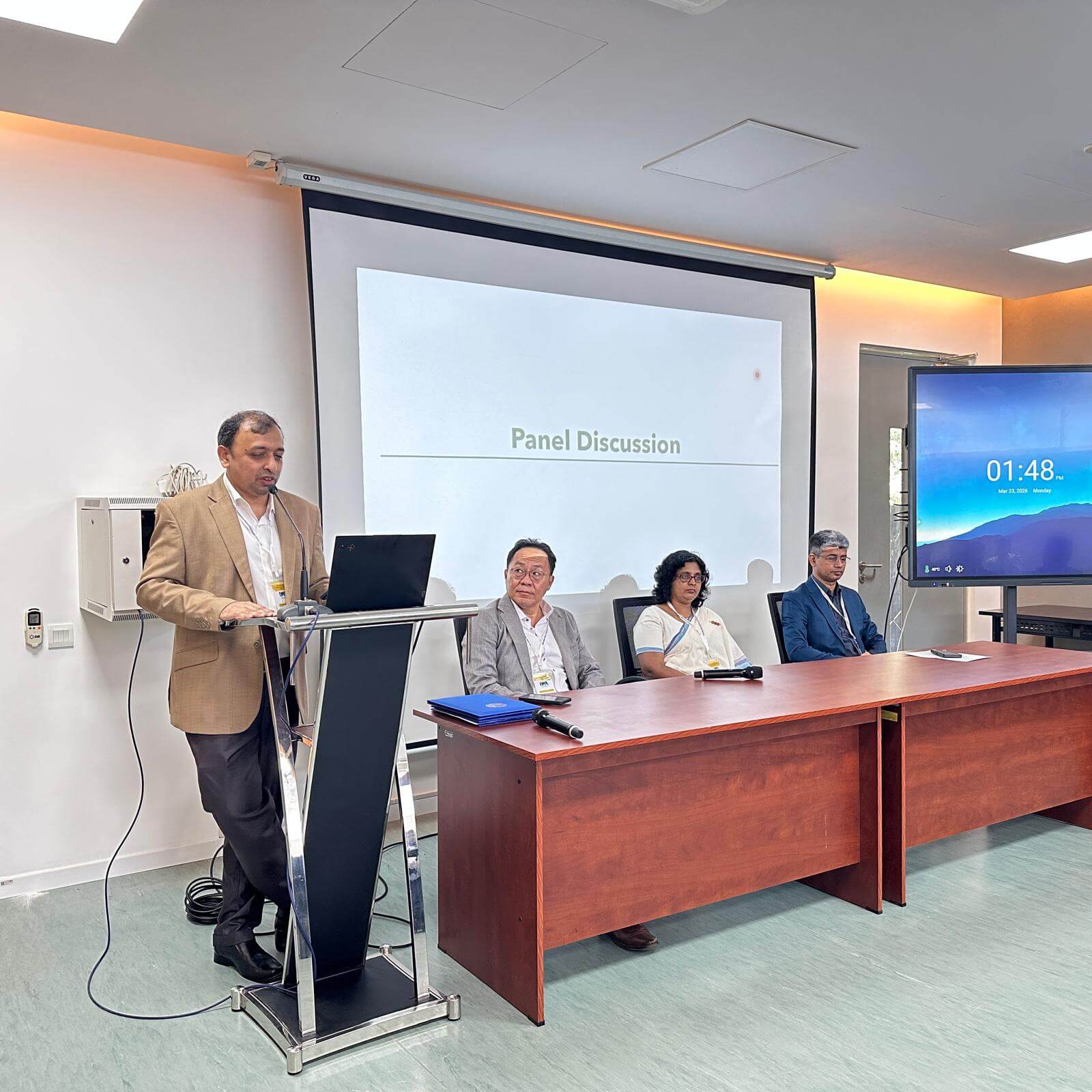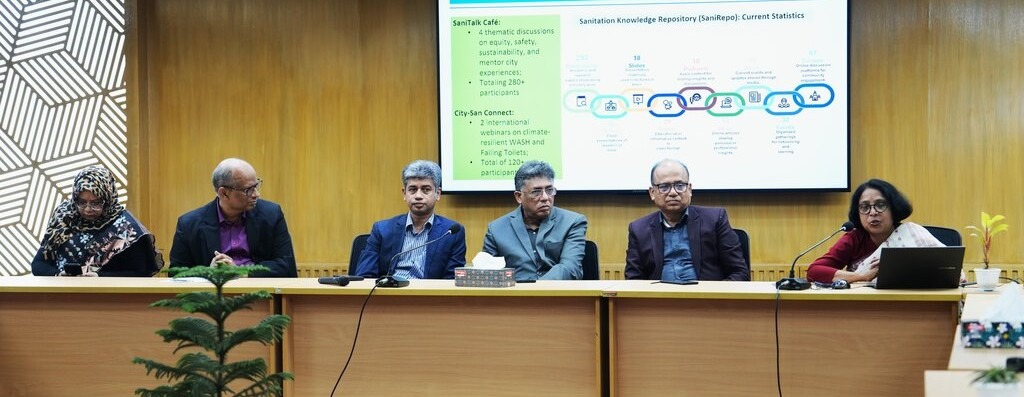

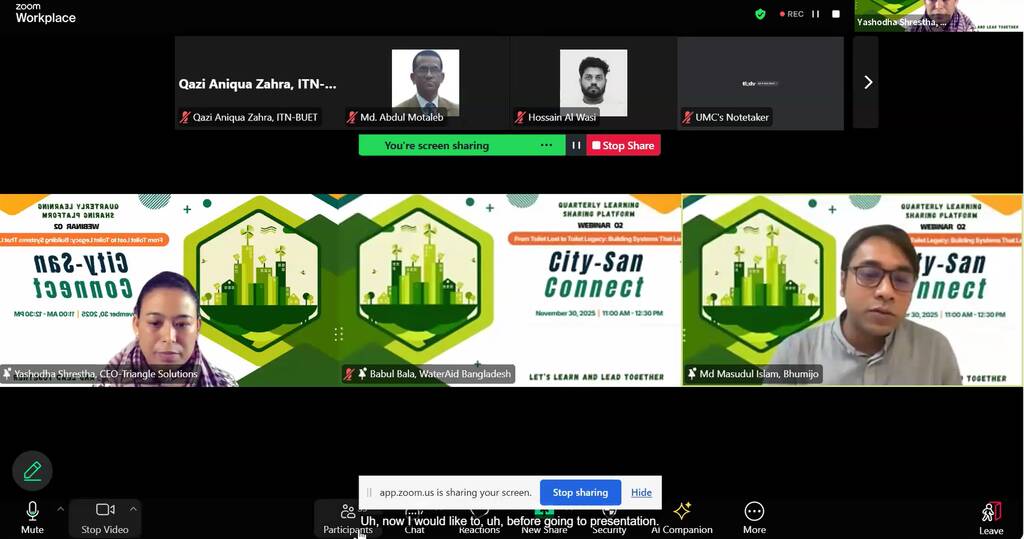
30 November 2025, the second session of City-San Connect, hosted by ITN-BUET under the SaniRepo platform, brought together nearly 45 participants from Bangladesh and abroad for a dynamic virtual dialogue on the theme “From Toilet Lost to Toilet Legacy: Building Systems That Last.” Timed with World Toilet Day, the 90-minute session explored why many public sanitation facilities fail over time and how cities can ensure long-term functionality. Moderated by Md Masudul Islam, COO of Bhumijo, the event featured expert presentations, live discussions, and active audience engagement.
Presentation Highlights
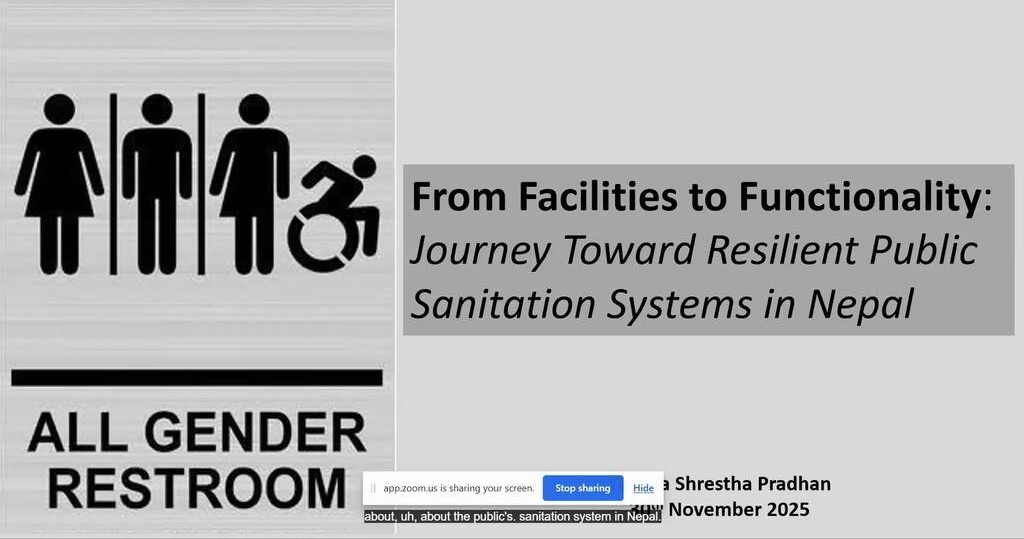
Yashodha Shrestha, CEO, Triangle Solutions, Nepal, provided an insightful overview of Nepal’s public sanitation journey, highlighting sanitation as a constitutional right and outlining the country’s progress in establishing public facilities. She also addressed persistent challenges, including rapid urbanization and inadequate toilet coverage. Yashodha emphasized Nepal’s move toward resilient designs, stronger O&M systems, and community involvement to ensure lasting public sanitation services. Her presentation prompted thoughtful questions about sustainability models and operational strategies.
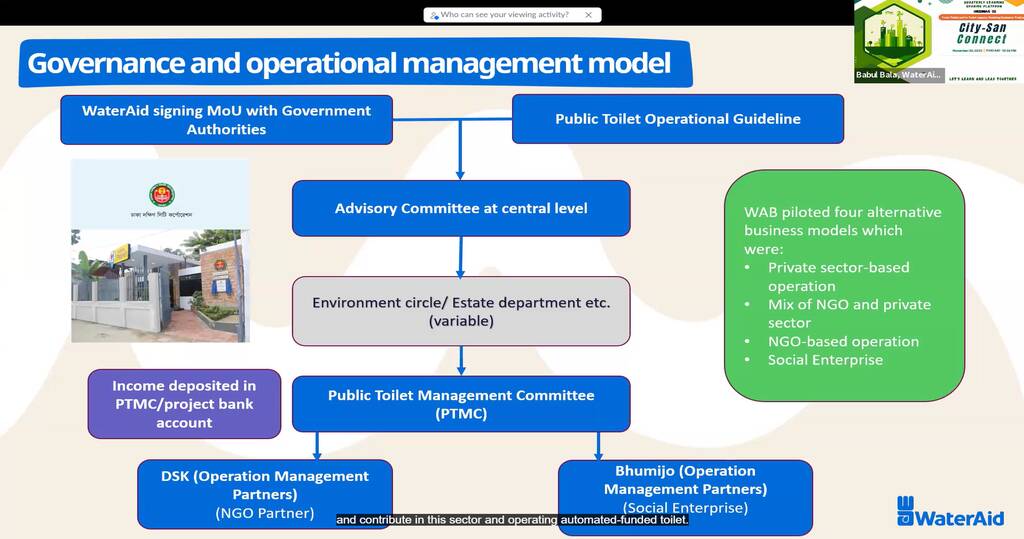
Babul Bala, Programme Lead, WaterAid Bangladesh, shared WaterAid’s experience in developing modern, inclusive public toilets in Bangladesh—particularly facilities that serve women and persons with disabilities. He detailed WaterAid’s sustainability model, which combines user fees, trained caretakers, and management committees to maintain service quality. Participants also shared positive experiences from their communities, noting improvements in accessibility, safety, and overall dignity through upgraded facilities.
Interactive Discussion
Participants actively engaged both presenters, raising questions about financing, maintenance systems, user-centered design, and strategies to prevent the “toilet loss” that results when poorly maintained facilities become unusable. The discussion reinforced that public toilets are not just infrastructure, they are symbols of health, dignity, and community pride.
The session also highlighted the global scale of toilet loss. Millions of toilets worldwide have become non-functional due to weak O&M, governance gaps, and design flaws, resulting in billions of dollars in wasted investment. Speakers stressed that achieving SDG 6.2 requires a shift from building toilets to ensuring they last.
Way Forward
City-San Connect reaffirmed its role as a platform for shared learning and action in urban sanitation. Key takeaways included the need for:
- Strong O&M and financing systems
- Inclusive and resilient design
- Community engagement
- Clear governance and accountability
- Continuous monitoring to prevent toilet loss