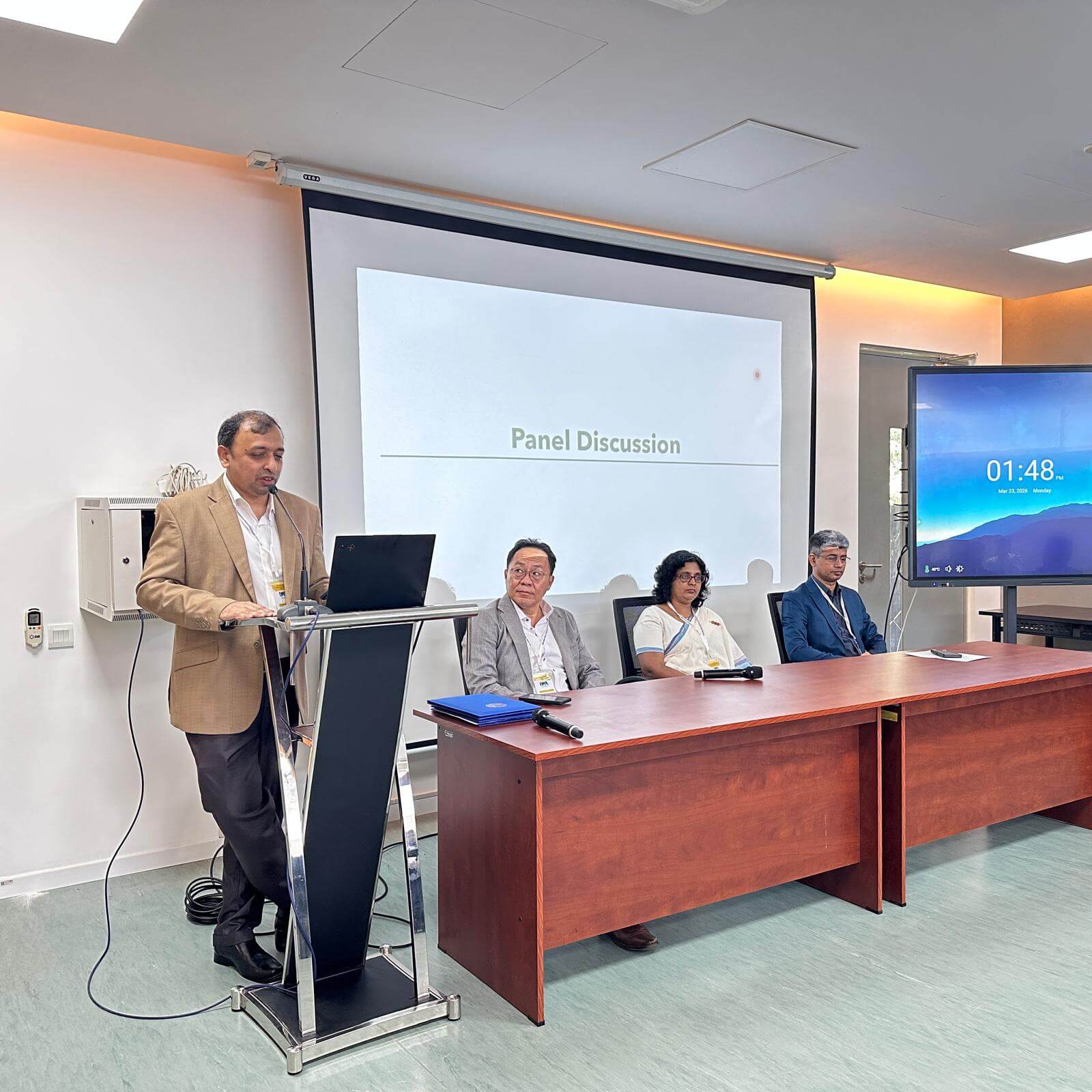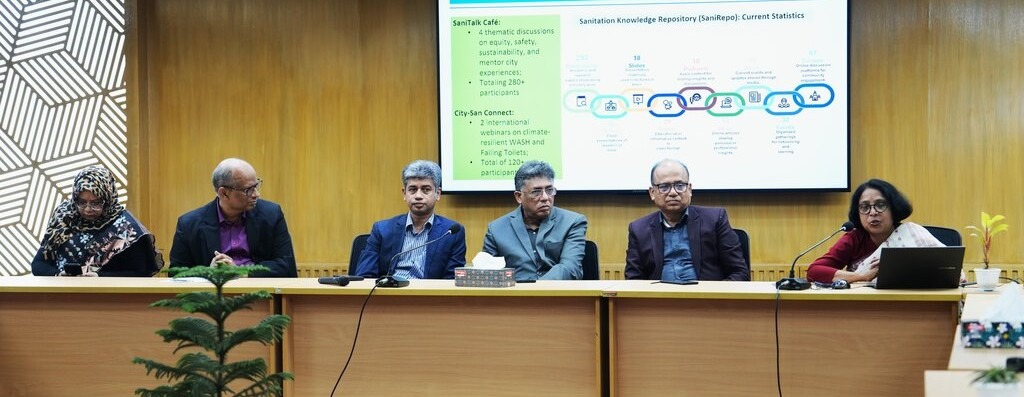

A four-member delegation from ITN-BUET embarked on a week-long visit to Nepal from 3–8 August 2025, aimed at strengthening regional collaboration in sanitation and hygiene, and fostering peer learning between mentor cities. The visit was hosted by ENPHO (Environment and Public Health Organization) and featured combined strategic meetings, field visits, and knowledge exchange sessions, resulting in concrete outputs that will guide future collaboration.
The delegation led by Prof. Dr. Rowshan Mamtaz, Director of ITN-BUET, along with Mr. Alauddin Ahmed, Project Manager, Mr. Kazi Amin, Knowledge Management Specialist, and Ms. Qazi Aniqua Zahra, Project Officer, had a planning workshop at ENPHO headquarters on CWIS Capacity Building Hub. The in-depth discussion included important agenda like, the roll-out of Online Learning Management System (OLMS), expansion of the Integrated Municipal Information System (IMIS), mentoring cities and upcoming regional collaboration events.
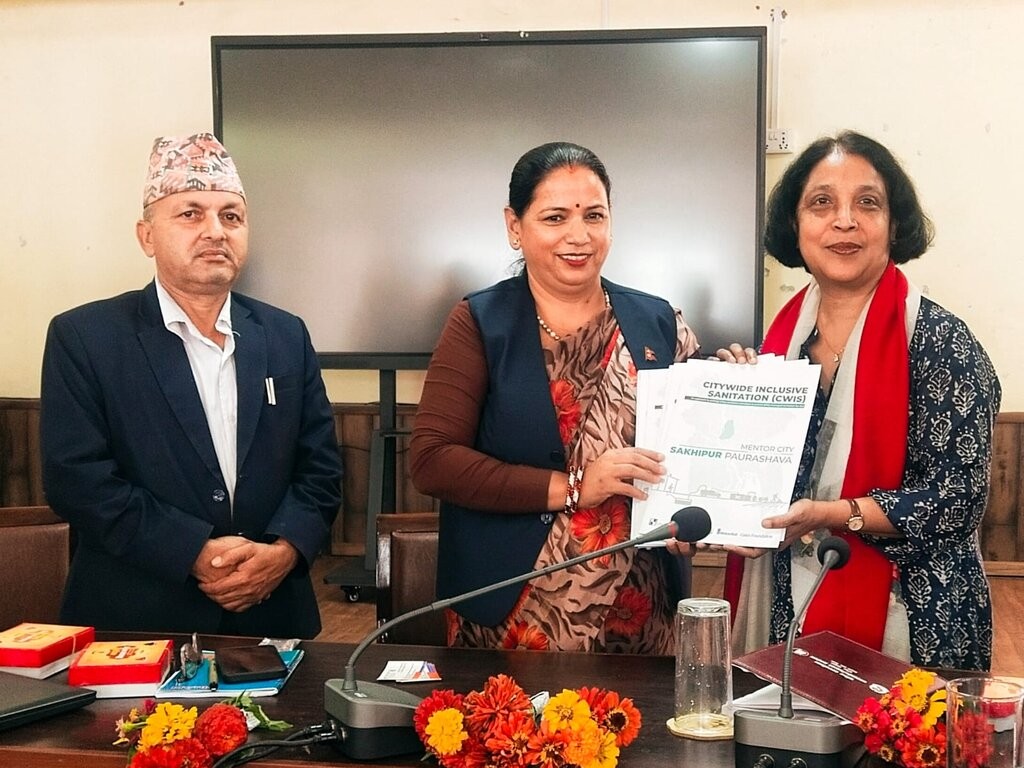
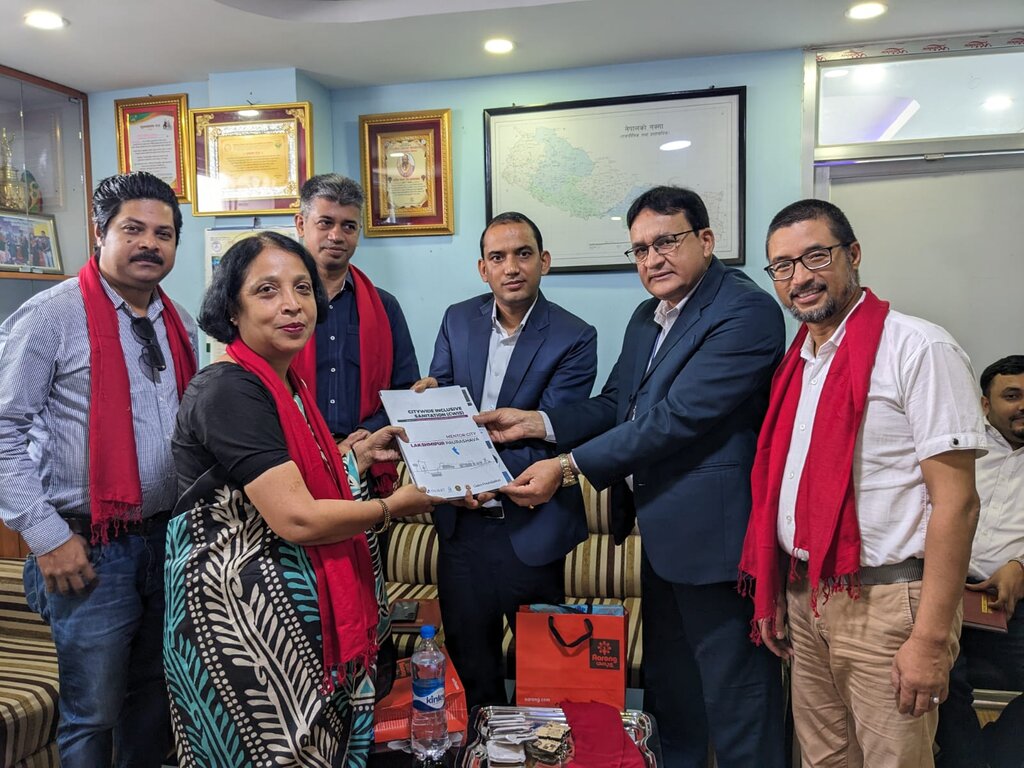
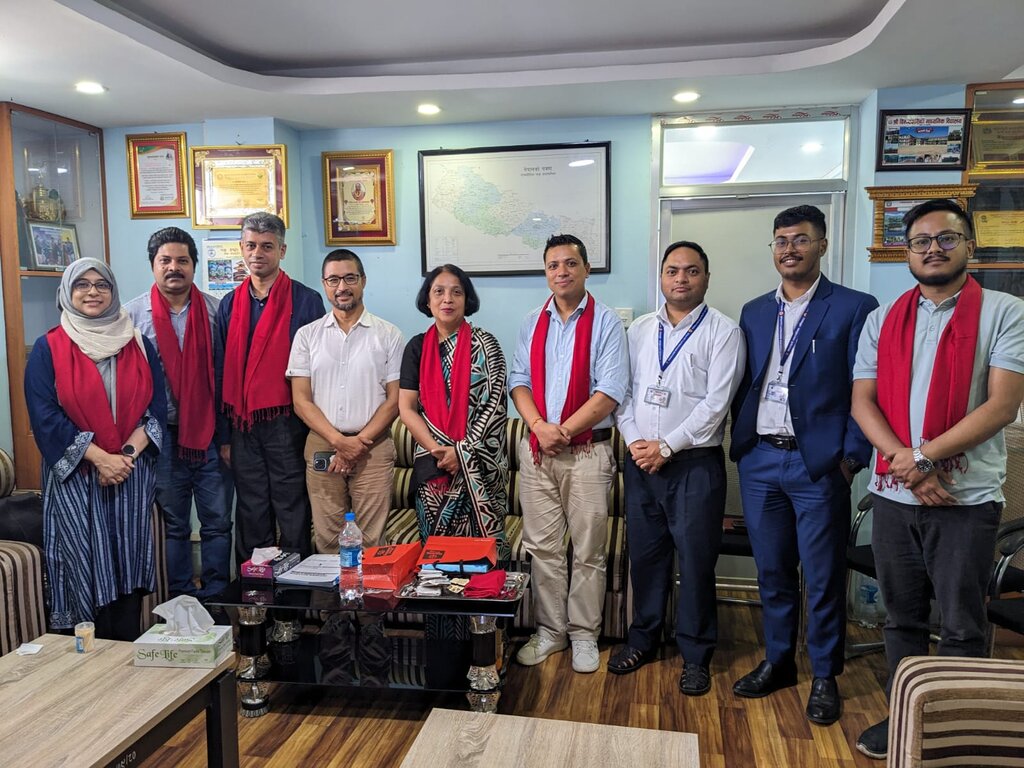
Next, the delegation visited Waling Municipality, one of Nepal’s distinguished mentor cities. Known locally as the “Pink City”—a title earned by painting all buildings that meet construction codes in a distinctive pink hue—Waling has built a reputation for civic pride and innovation. The ITN-BUET team was warmly welcomed by municipal officials, led by Deputy Mayor Mrs. Kabita Tiwari, before engaging in in-depth discussions on the city’s sanitation journey. Conversations explored Waling’s governance mechanisms, tariff structures, and strategies for allocating municipal resources. Officials also shared their plans to invest in an Integrated Municipal Information System (IMIS), aimed at centralizing data management and transitioning to paperless recordkeeping. The visit concluded with a guided tour of the municipality’s well-maintained Fecal Sludge Treatment Plant (FSTP), offering valuable operational insights on efficiency and resource recovery. Lessons from Waling’s model are expected to inspire documentation and adaptation efforts for mentor cities in Bangladesh.
Afterwards, the delegation proceeded to Mahalaxmi Municipality, another mentor city, to explore its integrated sanitation initiatives, including the implementation of the Integrated Municipal Information System (IMIS). The municipality’s experience demonstrated how technology can enhance service delivery and accountability. These exchanges highlighted practical approaches to urban sanitation management and capacity building.
The visit concluded with a joint debriefing session between ITN-BUET and ENPHO. Both organizations agreed on key action points, including the formal signing of a collaboration contract, organization of regional learning events in 2026, and cross-documentation of successful sanitation models for regional dissemination. This visit reinforced the value of South-South collaboration, providing practical knowledge, deepening institutional partnerships, and charting a clear pathway to scale innovation and strengthening municipal capacities for sustainable sanitation solutions.