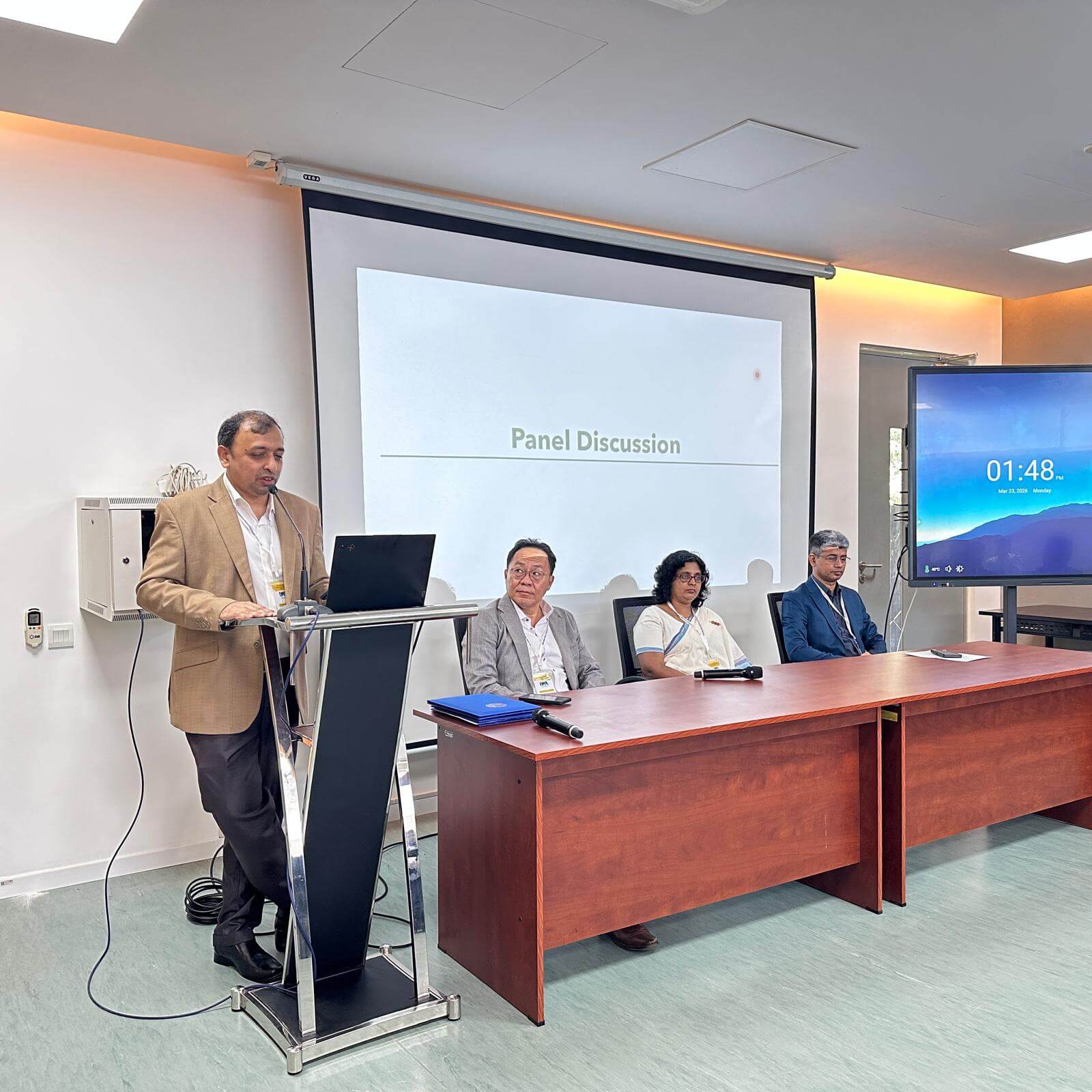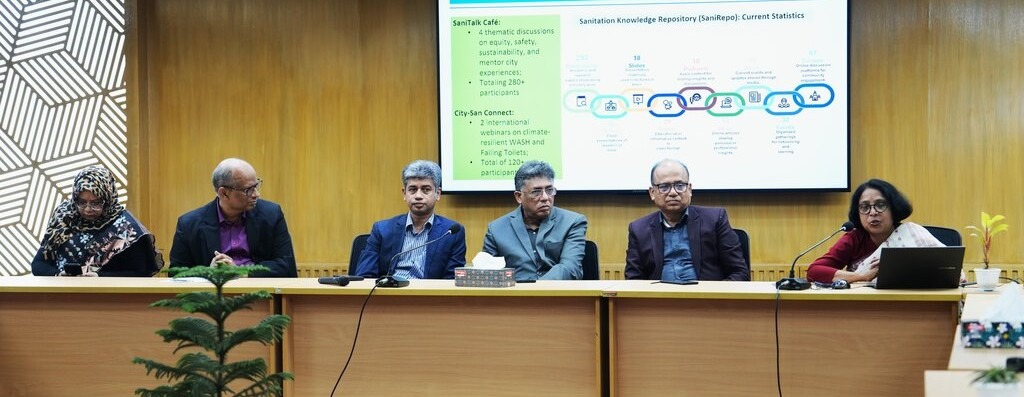

More than 100 participants from Nepal, Bangladesh, and India came together virtually on October 08, 2025, for the Regional Learning and Sharing Meeting on Citywide Inclusive Sanitation (CWIS), titled ‘From South Asia to the World: CWIS Learning Forum’. The event was jointly organized by CWISAN Nepal, Bangladesh FSM Network, and NFSSM Alliance India and coordinated by Dasra (India), ENPHO (Nepal) and, ITN-BUET (Bangladesh), to exchange knowledge, innovations, and lessons in advancing inclusive sanitation systems across the region.
A Regional Dialogue for Shared Learning
Moderated by Pragya Bose from Dasra, the three-hour virtual forum set the stage for a dynamic exchange on how South Asian countries are translating the CWIS vision— “inclusive sanitation for all, across entire cities”—into practical action.
Participants kicked off the session with a Mentimeter poll, sharing words they associate with CWIS—such as equity, innovation, systems, and collaboration, capturing the spirit of the day’s dialogue.

Showcasing Country Journeys
Nepal: Institutionalizing CWIS through Policy and Capacity Building
CWISAN Nepal highlighted how the alliance is institutionalizing CWIS through policy, advocacy, and capacity development. Speakers and topics from Nepal were Mr. Sanjaya Adhikari (UN-Habitat Nepal) on developing Nepal’s Water and Sanitation Regulation, Ms. Preeti Mittal (WaterAid Nepal) on citizen engagement through the Media Fellowship Model, and Mr. Rajendra Shrestha (ENPHO) on strengthening CWIS through capacity building. Nepal’s case demonstrated how strong policy foundations and partnerships are driving systemic change.
Bangladesh: Driving Innovation through Finance and Service Delivery
The Bangladesh FSM Network showcased progress through financing mechanisms and service delivery models. Speakers and topics from Bangladesh were Sirajus Salekin (Practical Action) on facilitating access to green finance for local sanitation firms, Md. Mojibur Rahaman (FINNISH Mondial) on results-based financing for sanitation, and Tahia Afsha Khan (WSUP Bangladesh) on Sweep—a model for last-mile sanitation service delivery. Bangladesh’s approach combines finance, entrepreneurship, and regulation to promote inclusion and sustainability.
India: Scaling CWIS through Policy, Innovation, and Climate Resilience
From India, the NFSSM Alliance presented how policy reforms, technology, and climate resilience are advancing CWIS. Speakers and topics from India were Subrata Chakraborty (CSE) on governance reforms for inclusive sanitation, Mahreen Matto (NIUA) on climate-resilient sanitation in hilly regions, and Praveen Nagaraja (WASH Institute) on circular and climate-resilient sanitation technologies. Together, these efforts illustrate how India is translating CWIS principles into scalable national action.
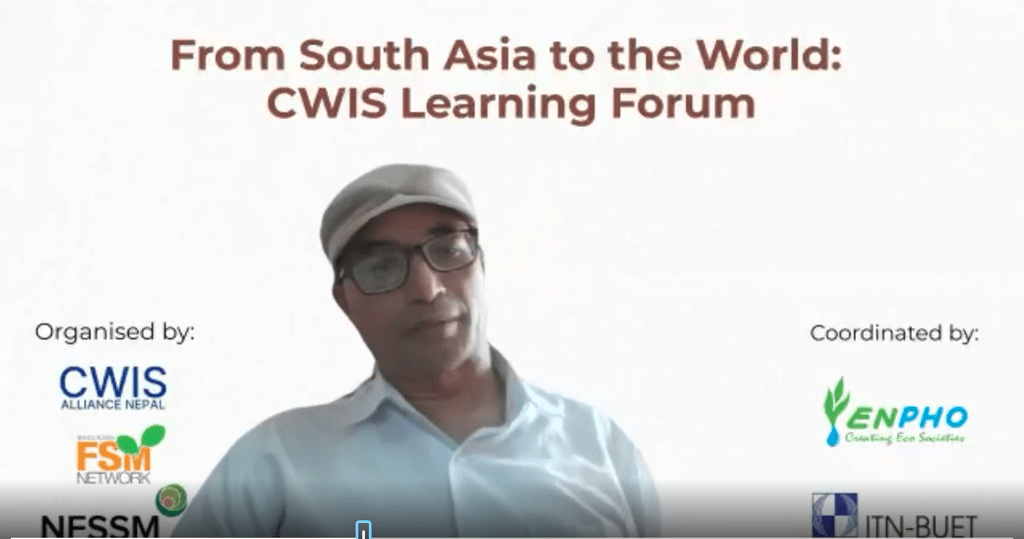
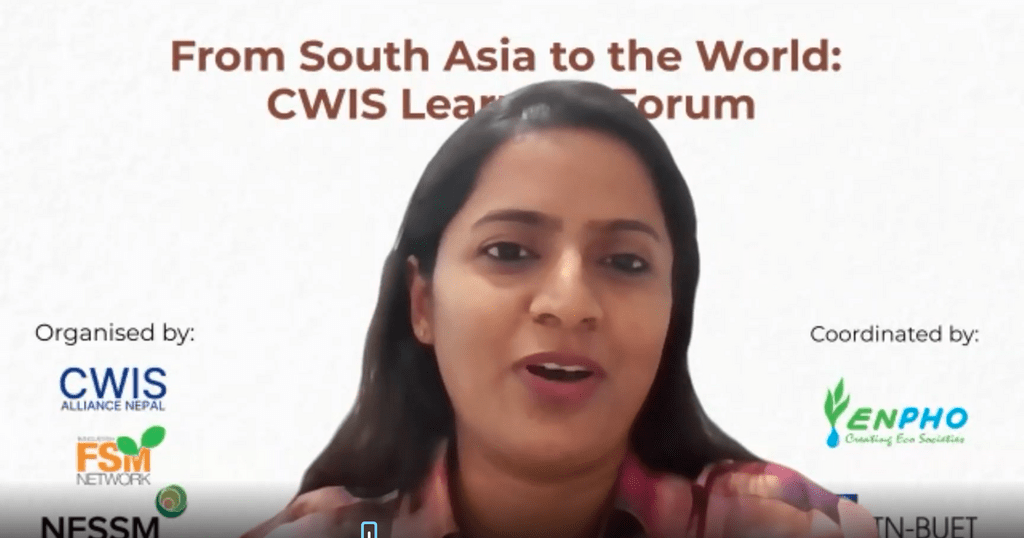

Engagement and Energy: A Truly Interactive Forum
The virtual room remained vibrant throughout, with attendees actively engaging through questions, comments, and reflections. The Zoom chat stayed lively with queries and insights from participants, many answered directly by speakers or discussed live during sessions. This high level of participation underscored the collective enthusiasm for advancing inclusive sanitation in South Asia.
Closing Reflections
As the forum concluded, three themes emerged: strengthening enabling environments through governance, mobilizing innovative financing, and fostering local capacity and innovation. Organizers thanked all speakers and participants and noted that a summary report and session recording would be shared soon.