
A Strategic Partnership Agreement has been signed to boost skills, share knowledge, and drive innovation in urban sanitation by bringing together ITN-BUET and DPHE’s initiative focused on 10 priority towns across Bangladesh.
Under this partnership, ITN-BUET and the LLF 10 Towns Project will jointly implement a series of knowledge-sharing and training initiatives to enhance the skills and institutional capacity of municipal and DPHE officials. The agreement outlines collaborative efforts in areas such as Citywide Inclusive Sanitation (CWIS), fecal sludge management (FSM), gender integration, and digital systems strengthening including Integrated Municipal Information System (IMIS).
The partnership aims to strengthen local capacity through refresher trainings on CWIS, FSM, and gender-inclusive approaches. It also includes developing IMIS training modules, organizing peer learning visits, and facilitating knowledge exchange with municipalities and twinning programs in collaboration with other key partners such as GWSC and Islamic Development Bank (IsDB).

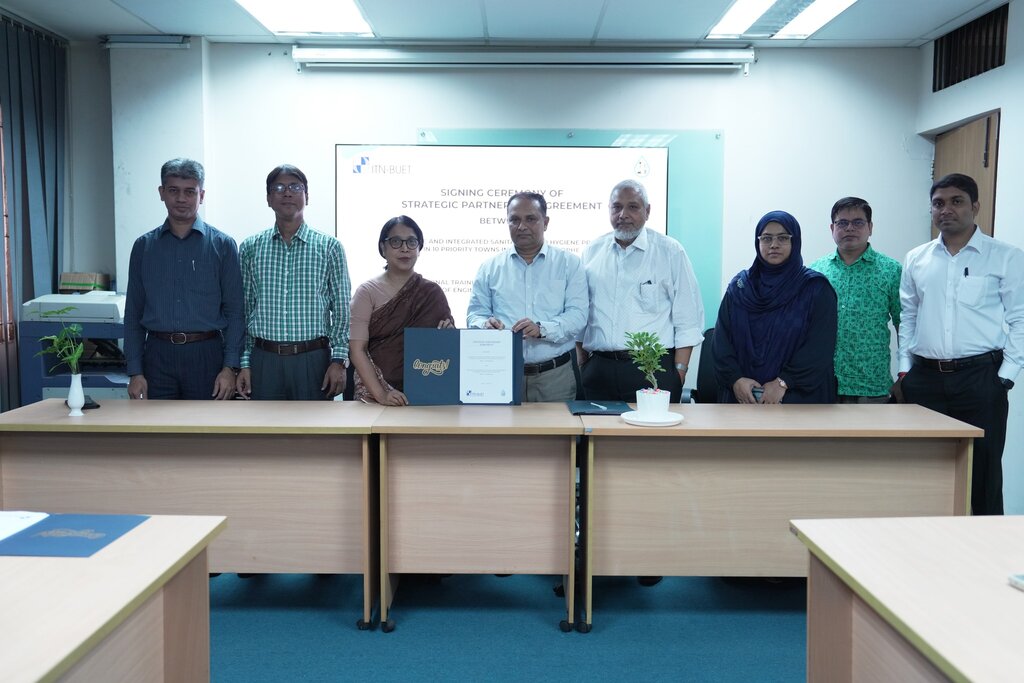

Speaking on the occasion, Prof. Dr. Rowshan Mamtaz, Director of ITN-BUET, emphasized the importance of building a skilled workforce for sustainable urban sanitation. “This agreement strengthens our joint vision to scale inclusive and resilient sanitation solutions through structured capacity building and collaboration,” she said.
Mr. S. M. Shamim Ahmed, Project Director of the LLF 10 Towns Project at DPHE, said, “This partnership marks a step forward in strengthening local institutions for inclusive sanitation. With tools like the Integrated Municipal Information System (IMIS), we’ll be better equipped to plan, monitor, and deliver services more effectively across our towns.”
The SPA, effective until December 2026, will also support the development and contextual adaptation of IMIS training modules and tools, ensuring alignment with local government needs. The agreement offers a flexible framework that may be expanded further to explore emerging priorities and collaborative opportunities.
This strategic partnership is a significant step toward institutionalizing CWIS practices and fostering long-term sustainability in urban sanitation planning and delivery.