

Resources
Find journal articles, external publications, and ITN-BUET’s own portfolio of reports and briefs.
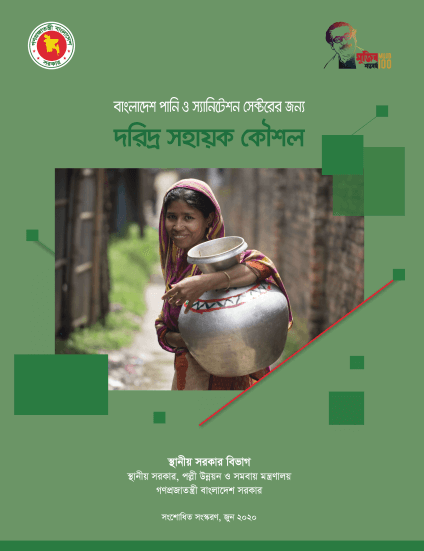
Pro-Poor Strategy for Water and Sanitation Sector in Bangladesh (Bangla)
বাংলাদেশ পানি ও স্যানিটেশন সেক্টরের জন্য দরিদ্র সহায়ক কৌশল
July, 2020
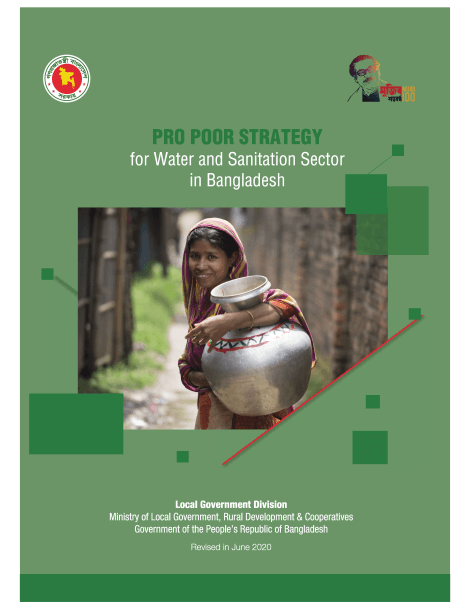
Pro-Poor Strategy for Water and Sanitation Sector in Bangladesh
Bangladesh has met the Millennium Development Goal (MDG) target for drinking water by increasing access to improved water services. At present almost 98% of the population already gained access to basic need of drinking water facilities…
June, 2020
National Action Plan for Implementation of Institutional and Regulatory Framework (IRF) for Fecal Sludge Management for Rural Areas
National Action Plan for Implementation of Institutional and Regulatory Framework (IRF) for Fecal Sludge Management for Paurashava.
March, 2020
National Action Plan for Implementation of Institutional and Regulatory Framework (IRF) for Fecal Sludge Management for Rural Areas (Bangla)
National Action Plan for Implementation of Institutional and Regulatory Framework (IRF) for Fecal Sludge Management for Rural Areas.
March, 2020
National Action Plan for Implementation of Institutional and Regulatory Framework (IRF) for Fecal Sludge Management for Paurashava
National Action Plan for Implementation of Institutional and Regulatory Framework (IRF) for Fecal Sludge Management for Paurashava.
March, 2020
National Action Plan for Implementation of Institutional and Regulatory Framework (IRF) for Fecal Sludge Management for Paurashava (Bangla Version)
National Action Plan for Implementation of Institutional and Regulatory Framework (IRF) for Fecal Sludge Management for Paurashava (Bangla Version).
March, 2020
FSM Network Bangladesh Looking Back: 2018/2019
VIEW / DOWNLOAD
Publisher(s): Practical Action
July, 2019
Assessment Report: Waste Management Practice and Capacity – Paurashava
The report presents the current sanitation, solid waste and faecal waste management conditions of the Paurashavas.
Publisher(s): ITN-BUET
June, 2019
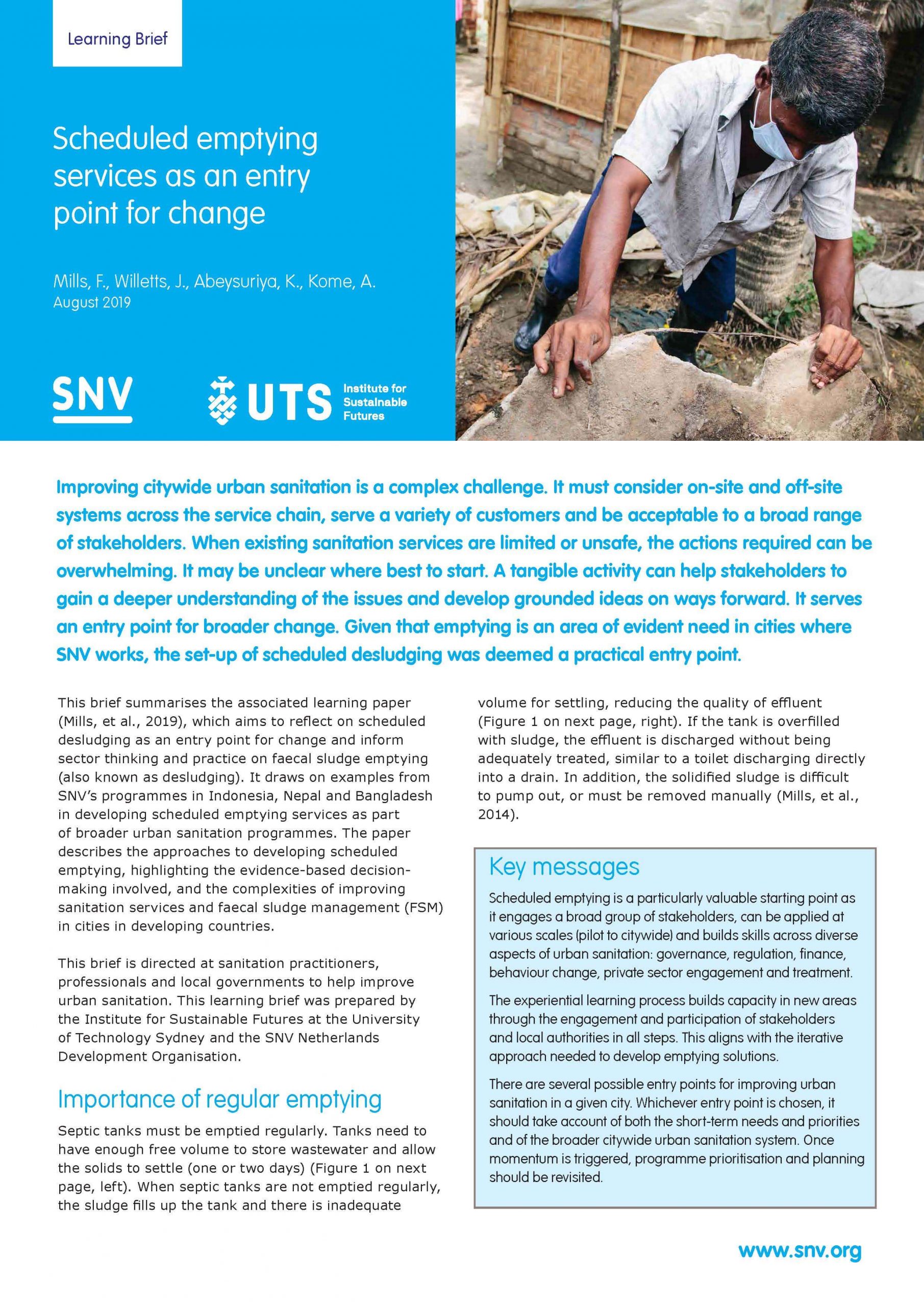
Scheduled emptying services as an entry point for change
There are several possible entry points for improving urban sanitation in a given city. Whichever entry point is chosen, it should take account of both the short-term needs and priorities and of the broader citywide urban sanitation system. Once momentum is triggered, programme prioritisation and planning should be revisited. Scheduled emptying is a particularly valuable starting point as it engages a broad group of stakeholders, can be applied at various scales (pilot to citywide) and builds skills across diverse aspects of urban sanitation: governance, regulation, finance, behaviour change, private sector engagement and treatment.
Publisher(s): SNV Netherlands Development Organisation
February, 2019