
ITN-BUET disseminated Bangladesh’s water and sanitation progress at the UNC Water & Health Conference held from 27 to 31 October 2025 at the University of North Carolina, USA. The conference, organized annually by the Water Institute at UNC, brings together global researchers, policymakers, development partners, and practitioners to advance solutions for safe water, sanitation, hygiene and public health, and environmental sustainability through evidence-based innovation and cross-sector collaboration.
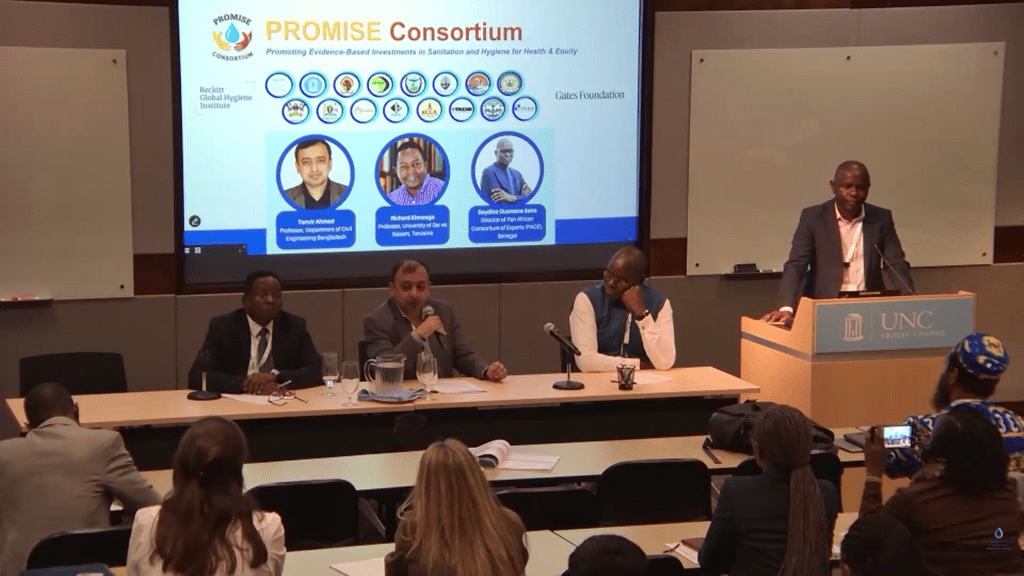
Prof. Dr. Tanvir Ahmed, Director of the GSGS Regional Hub for South & Southeast Asia, participated as a distinguished speaker and panelist, including at the PROMISE Consortium side event titled “Understanding the Pathogen Flows Associated with Sanitation in Urban Communities and Health Care Facilities.” He emphasized integrating project-generated tools and learnings into national WASH programming and government planning to sustain skills, data systems, and institutional networks. Drawing on Bangladesh’s experience with shit flow diagrams (SFD), he highlighted how institutionalization supports routine application, curriculum integration, and continuous capacity development. He also recommended mainstreaming tools such as Sanipath and WASH FIT into national development proposals.
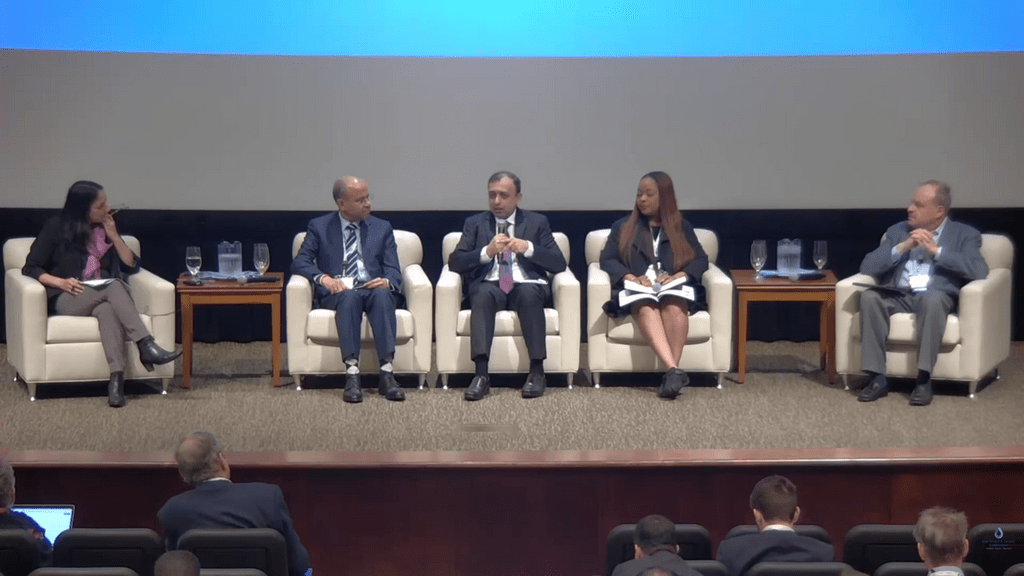
As a panelist in the plenary session on “The Role of the State” Prof. Ahmed shared Bangladesh’s progress in eliminating open defecation and expanding safe water access, while highlighting the growing financing and service delivery challenges associated with achieving SDG 6.1 and 6.2. He explained the transition from donor dependence to government-led financing, supported by development banks, microfinance institutions, and household investments. He emphasized the State’s responsibility in closing financing gaps, strengthening tariff collection, enhancing local government engagement, and regulating unregulated private infrastructure to ensure safety and climate resilience. He also highlighted the value of NGO innovations in reaching hard-to-serve populations and the importance of professional operation and maintenance models for sustainable service delivery.
Prof. Ahmed also delivered an oral presentation titled “Functionality of Arsenic–Iron Removal Plants in Water-Challenged Rural Areas of Bangladesh.” The presentation examined technical, social, financial, institutional, and environmental factors affecting AIRP performance. The findings showed that older systems, availability of alternative water sources, and biological contamination reduce functionality, while tariff collection, professional cleaning services, and dedicated maintenance personnel significantly improve system performance. The study underscored the importance of structured management systems, capacity building, and supportive policy and financing mechanisms for long-term sustainability, with relevance for other decentralized water systems in similar contexts.
Engagement in the UNC Water & Health Conference reflects ITN-BUET’s continued commitment to capacity development, applied research, and knowledge exchange to support sustainable and inclusive water and sanitation solutions in Bangladesh and beyond.