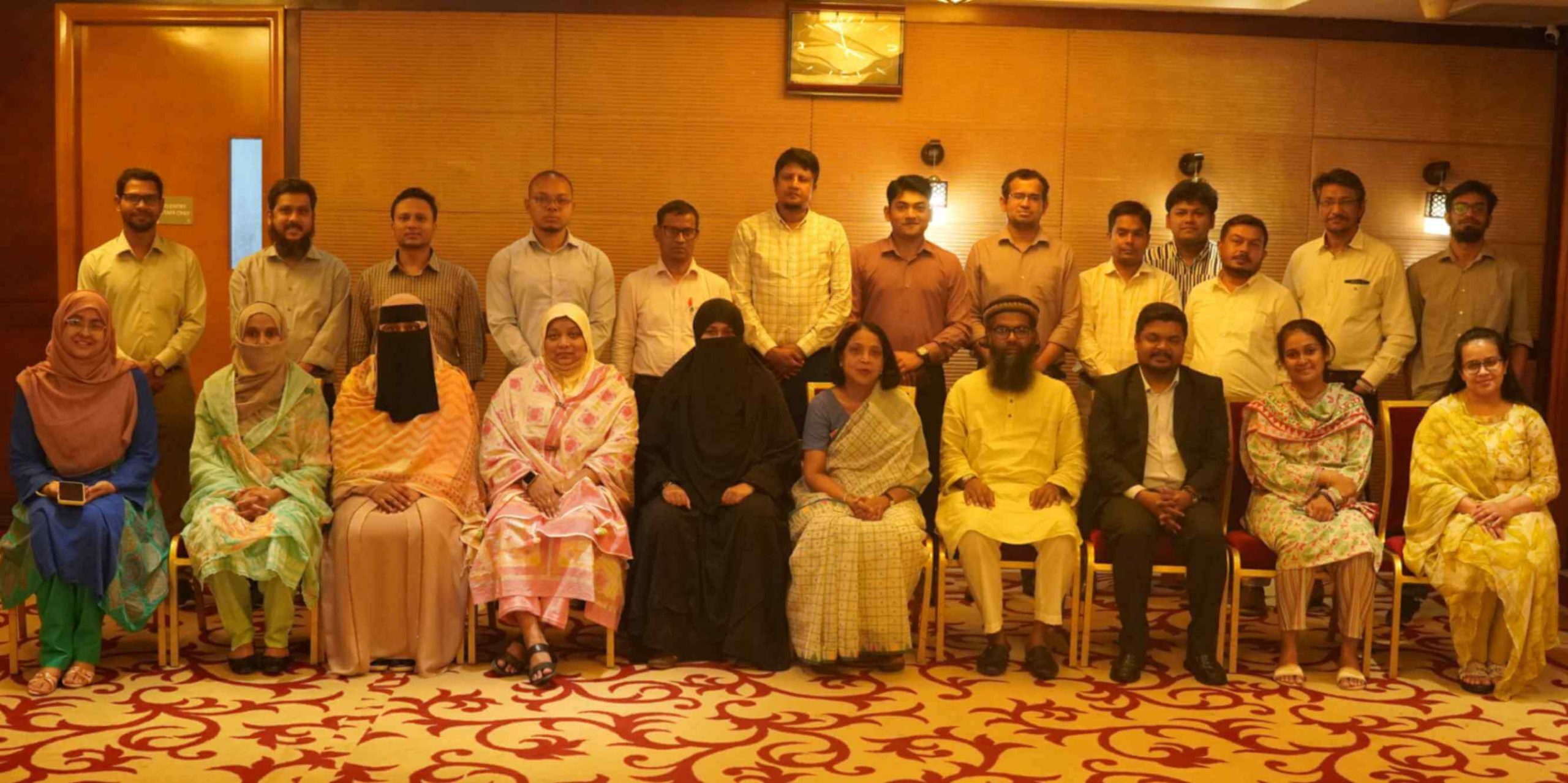

ITN-BUET successfully organised a residential capacity-building workshop on Citywide Inclusive Sanitation (CWIS) for municipal officials from eight municipalities at DESHA TARC, Kushtia on 16 August 2026. The workshop marked the third round of ITN-BUET’s master trainer development programme, aimed at strengthening the capacity of municipal officials and preparing them to serve as master trainers who can further disseminate CWIS at the local level.
The programme is part of ITN-BUET’s broader effort to establish a sustainable, municipality-led capacity-building mechanism for advancing inclusive and safely managed sanitation across Bangladesh. Through this train-the-trainer approach, municipal officials are equipped not only with technical knowledge but also with the skills required to share and apply that knowledge within their own municipalities and with neighbouring areas. The first two rounds of the master trainer development programme successfully produced nearly 50 master trainers from municipalities across Bangladesh. The third round brought together 16 municipal officials from eight municipalities, adding a new group of potential master trainers to this growing network.
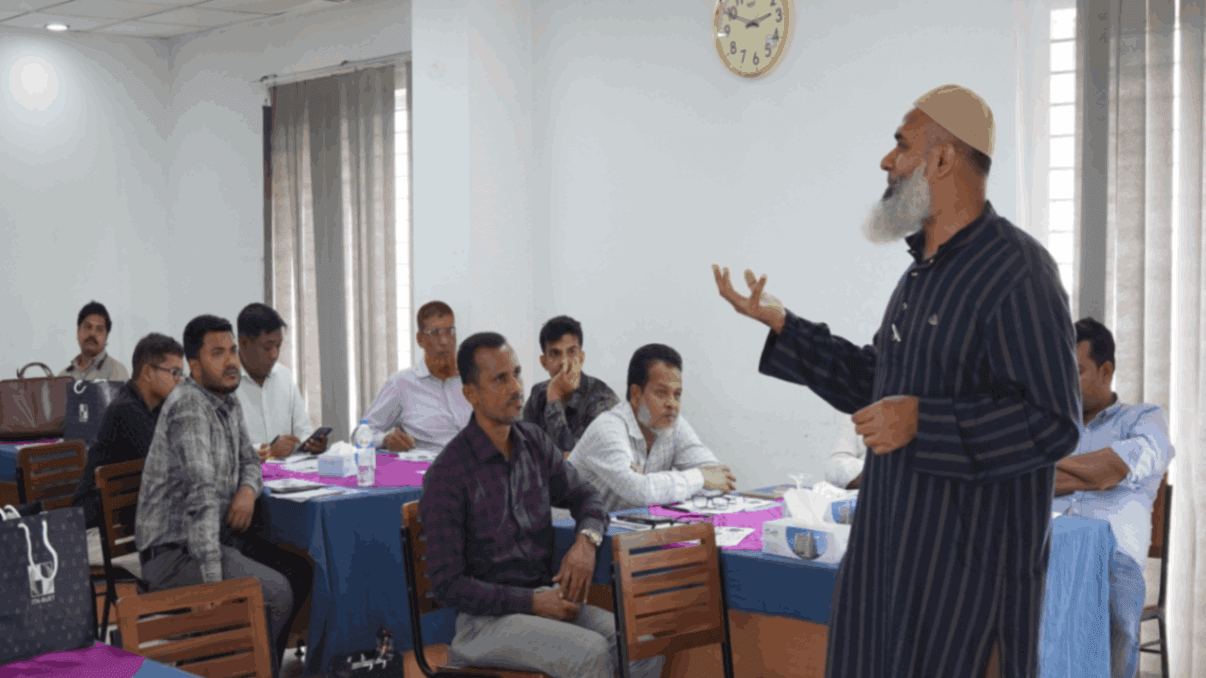
A key feature of the workshop was its peer-led and practical learning approach. Several sessions were facilitated by master trainers developed through the previous rounds of the programme. These municipal practitioners, who had themselves participated in earlier capacity-building programmes, shared their experiences and demonstrated how CWIS approach can be translated into practical municipal action. This approach reflects ITN-BUET’s vision of developing a self-sustaining network of sanitation champions within Bangladesh’s municipal sector.
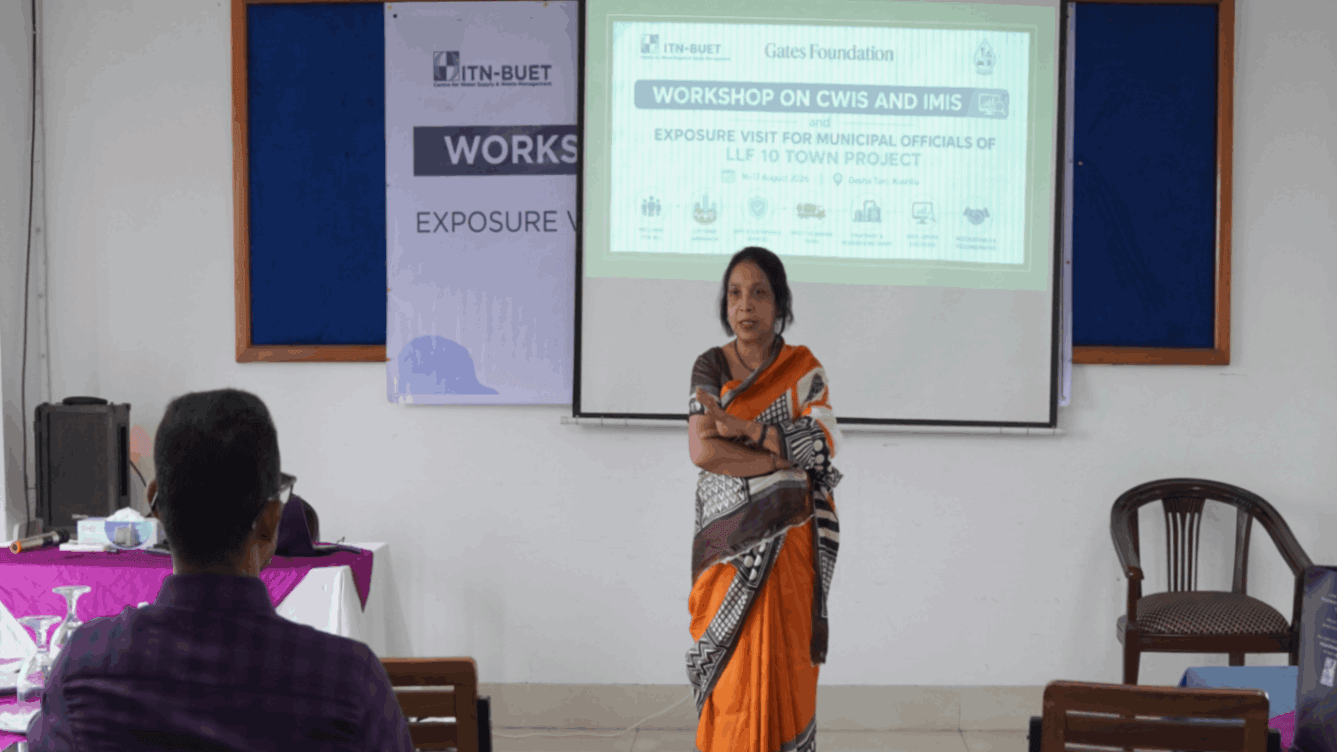
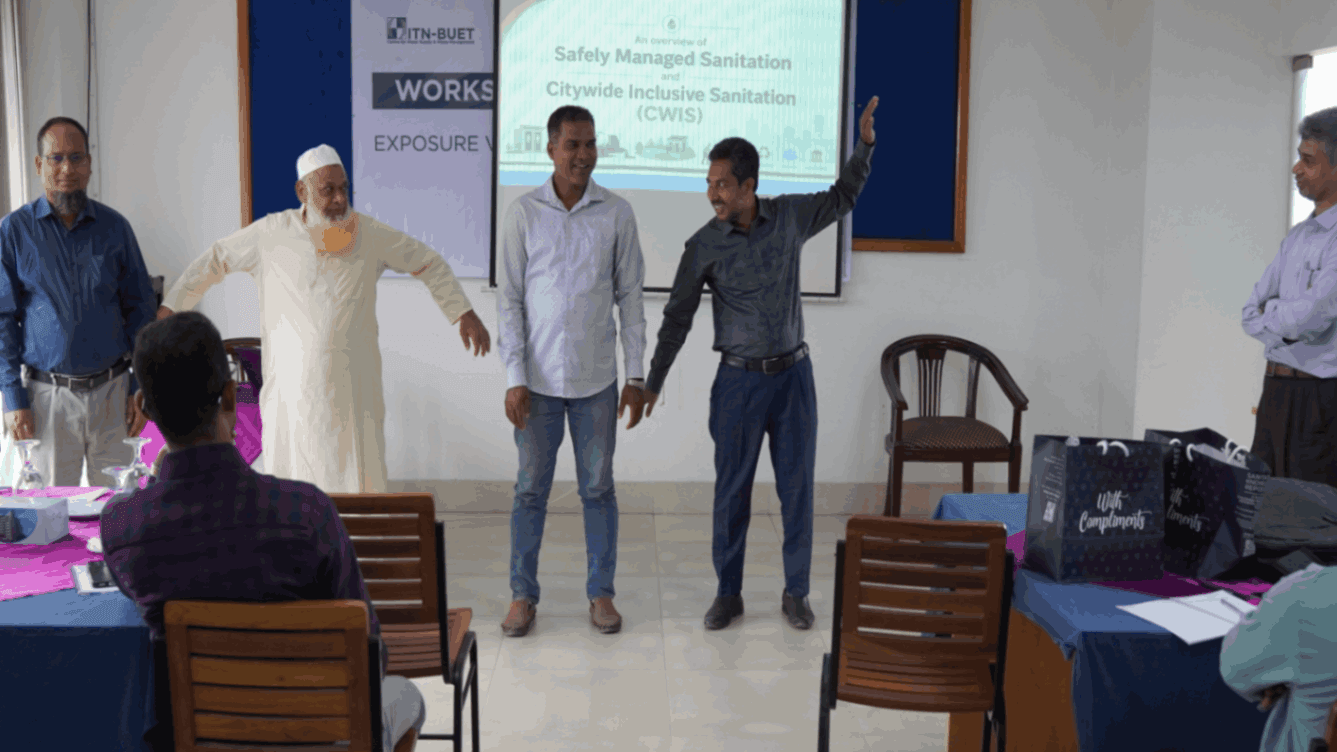
The workshop also provided an opportunity for participants to learn from the experience of Kushtia Municipality and other municipalities in implementing sanitation-related activities. Discussions focused on CWIS principles, municipal sanitation service delivery, institutional responsibilities, data and information management, and the practical role of municipal officials in advancing inclusive sanitation.
The programme was attended by officials from the Department of Public Health Engineering (DPHE), Kushtia and Dhaka who observed and evaluated the training as part of the continued collaboration between DPHE and ITN-BUET in strengthening municipal sanitation capacity.
The workshop was coordinated by K.A. Amin, Knowledge Management Specialist, ITN-BUET, who facilitated the overall programme. The day began with self-introductions from all participants and officials, setting a collaborative tone for the sessions ahead. The formal opening was declared by Prof. Dr. Rowshan Mamtaz, Director, ITN-BUET, following introductory remarks by Ms. Dilruba Farzana, Deputy Project Director (DPD) of the 10 Priority Towns in Bangladesh Project, DPHE, and Mr. Habibur Rahman, WASH Specialist, Islamic Development Bank (IsDB).
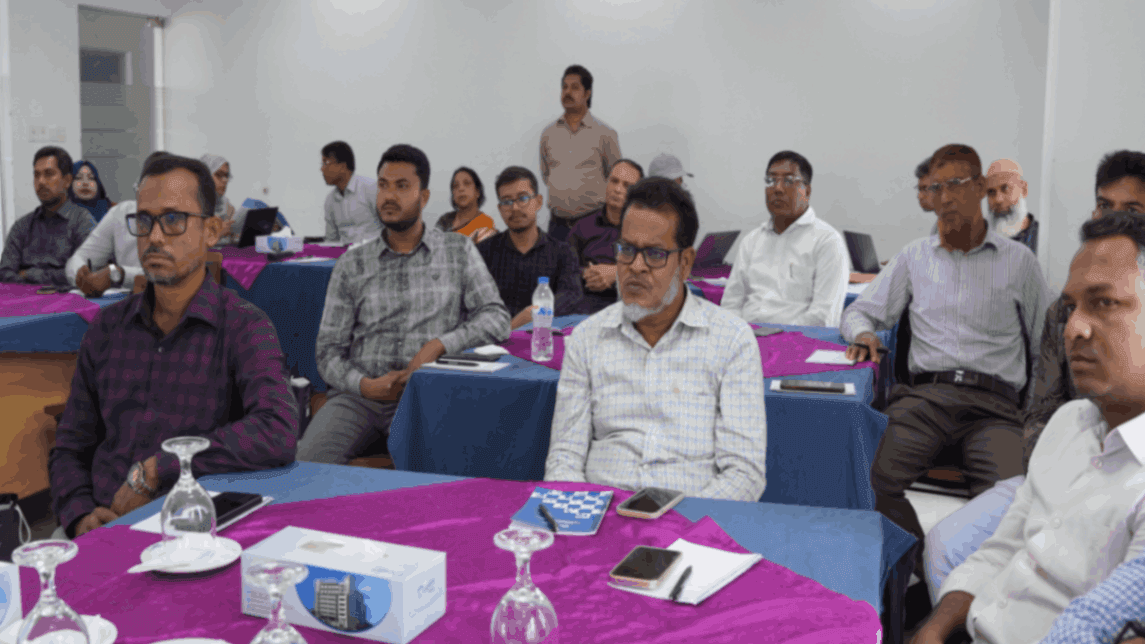
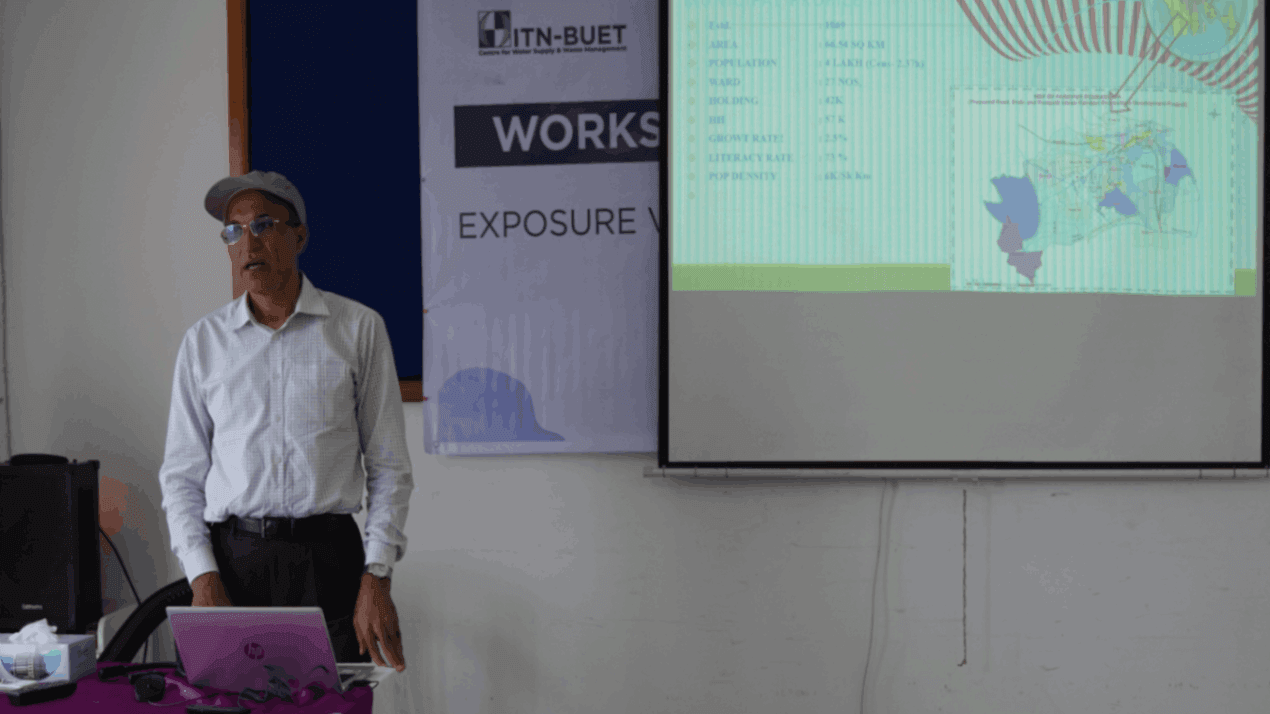
A comprehensive session on CWIS was delivered by Mr. Alauddin Ahmed, Project Manager, ITN-BUET, providing participants with the conceptual and practical foundation of CWIS. Participants then heard from municipal practitioners and master trainers of CWIS who shared on-the-ground insights. Mr. Ranver Ahmad, Town Planner, and Ms. Sabina Islam, Assistant Engineer (Water) from Kushtia Municipality, presented an overview of how Kushtia is approaching CWIS implementation. Mr. Shamsul Alam, Executive Engineer, Faridpur Municipality, shared experiences from Faridpur, including how they are managing their waste management processes.
Participants also received a detailed orientation on the Integrated Municipal Information System (IMIS) from Mr. Rakib Uddin Ahmed, Senior Information and Documentation Officer, ITN-BUET, highlighting the importance of reliable municipal data and information systems for planning, monitoring and improving sanitation services.
Throughout the day, sessions were kept participatory and interactive. Participants engaged in discussions and question-and-answer exchanges with the facilitating master trainers and officials.
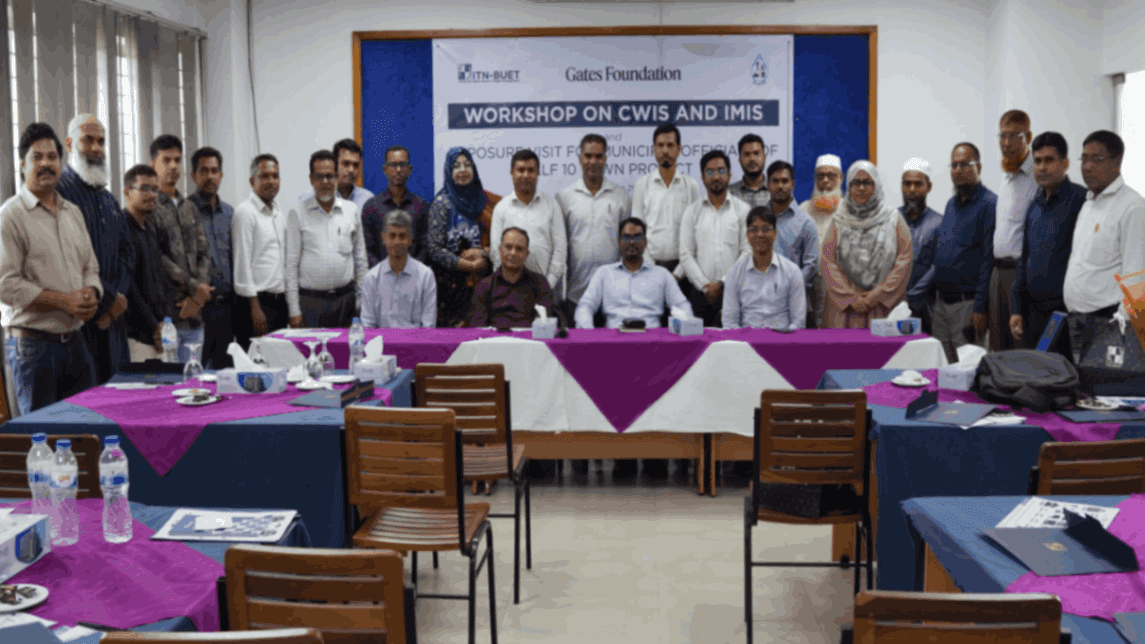
The programme concluded with a closing address by Mr. Jakir Hosen, Administrator, Kushtia Municipality, who formally closed the workshop and distributed certificates to the participants. Mr. Shamim Ahmed, Project Director, 10 Priority Towns in Bangladesh Project, DPHE, was also present at the closing session. In his remarks, he underscored the importance of strengthening the capacity of municipal officials to effectively implement the project and translate the knowledge gained through the training into practical action for ensuring safe, inclusive, and sustainable sanitation services for all. The closing session also provided an opportunity for participants to reflect on their learning, share feedback, and reaffirm their commitment to applying the knowledge and skills gained in their respective municipalities.
The newly trained officials expressed their commitment to applying the knowledge and skills gained through the workshop in their respective municipalities and to sharing these lessons with colleagues and other local stakeholders.
Through this continued master trainer development programme, ITN-BUET is building a growing national network of municipal sanitation professionals capable of supporting the wider adoption of CWIS and FSM. This approach is expected to strengthen local ownership, reduce dependence on external training support, and create a sustainable mechanism for knowledge transfer across municipalities.
With nearly 50 master trainers already developed through the first two rounds, and 16 additional potential master trainers joining the third cohort, ITN-BUET continues to advance its vision of creating a stronger, locally led capacity base for inclusive, equitable and safely managed sanitation services across Bangladesh.