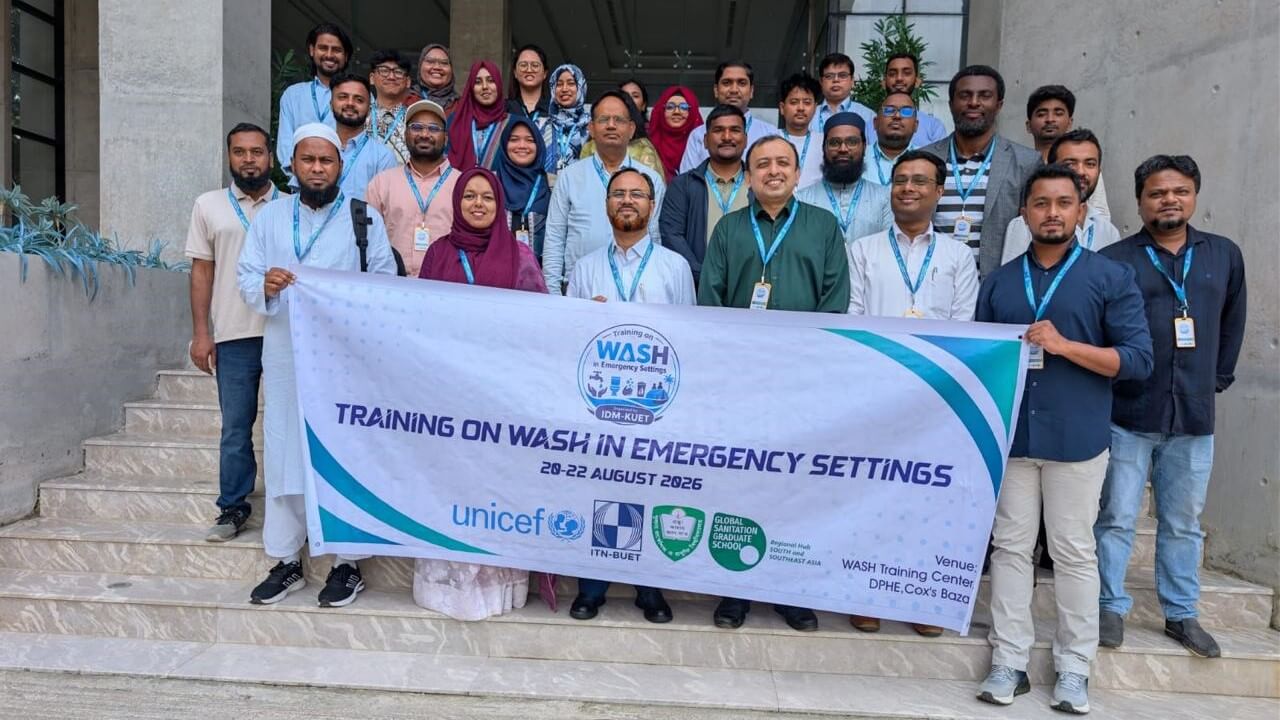

Recognizing the increasing importance of Water, Sanitation and Hygiene (WASH) in humanitarian response and climate resilience, the Global Sanitation Graduate School Regional Hub for South and Southeast Asia (GSGS RH SSEA), in collaboration with the Faculty of Civil and Environmental Engineering, Institut Teknologi Bandung (ITB), Indonesia, successfully organized the Integrated WASH (I-WASH) Summer Course 2026 under the theme “WASH in Emergency Settings”. The programme combined five weeks (06 June – 11 July 2026) of interactive online learning with two weeks (13-24 July 2026) of intensive field-based offline training at ITB in Indonesia, providing a comprehensive platform for knowledge exchange, technical capacity building, and regional collaboration among future WASH professionals of South and Southeast Asia regions.
The 2026 edition brought together 41 participants, including 19 female participants, representing prestigious institutions from across South and Southeast Asia, namely ITN-BUET (Bangladesh), Shahjalal University of Science and Technology (SUST), Khulna University of Engineering & Technology (KUET), Asian Institute of Technology (AIT), Mahidol University (Thailand), Pokhara University (Nepal), and Institut Teknologi Bandung (ITB), Indonesia. Among them, eleven participants represented Bangladesh, reaffirming the country’s growing commitment to humanitarian WASH education and regional leadership.
Designed to bridge the gap between academic knowledge and field implementation, the Summer Course featured an extensive curriculum addressing contemporary humanitarian WASH challenges. The online sessions covered Emergency Sanitation, Global Perspectives on WASH Development, Sanitation Systems in Indonesia, Climate-Resilient WASH, Humanitarian Principles, Gender-Responsive WASH in Disasters, WASH in Vulnerable Communities, Disaster Risk Reduction (DRR), SPHERE Humanitarian Standards, Emergency Planning for the Lembang Fault, and Case Studies of WASH Interventions across Asia. These sessions were facilitated by internationally recognized academics, development practitioners, and humanitarian experts, enabling participants to gain a multidisciplinary understanding of emergency WASH interventions.
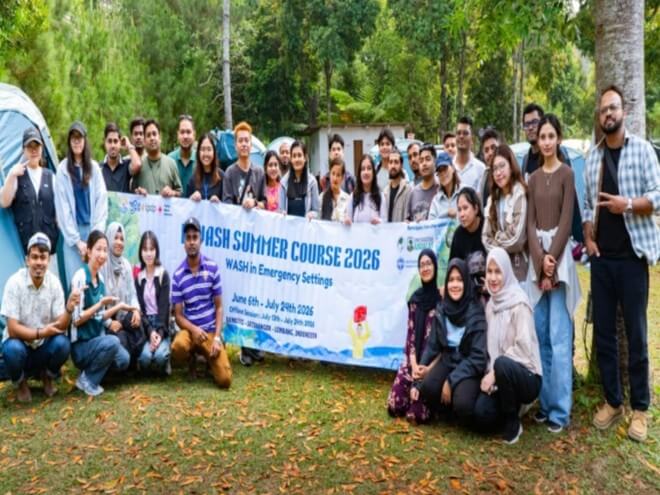
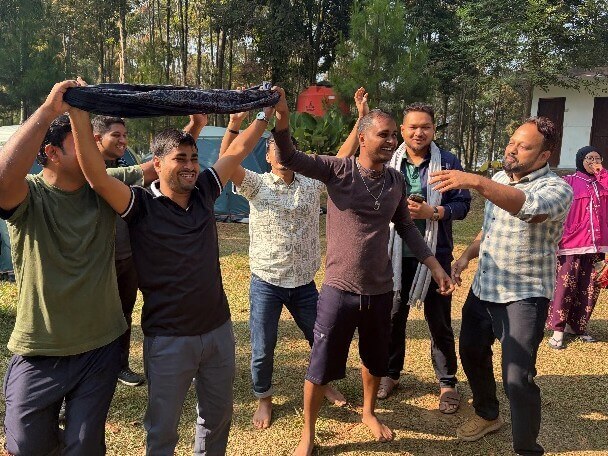
The residential programme in Jatinangor, West Java, further enriched participants’ learning experience through expert lectures, research-sharing sessions through an international conference, technical discussions, field excursion at disaster-prone areas, and intensive humanitarian simulations through hands-on exercises. A major highlight of the programme was the keynote lecture delivered by Prof. Damir Brdjanovic of UNESCO-IHE, Delft, Netherlands, one of the world’s foremost authorities in urban sanitation, environmental engineering, and humanitarian WASH. His inspiring presentation on Technological Developments in WASH introduced participants to innovative sanitation technologies, resilient engineering solutions, and practical approaches for emergency sanitation management. Emphasizing the integration of scientific innovation with humanitarian action, Prof. Brdjanovic encouraged participants to develop sustainable and context-specific WASH solutions capable of protecting public health in disaster-affected communities.
The programme also featured distinguished lectures by Prof. Dr. Imran Kabir, SUST, Bangladesh, Dr. Anish Ghimire, AIT, Thailand and Mr. Hilman Agung, Anthropologist of Indonesia. Their sessions focused on rapid emergency assessment, disaster preparedness, evidence-based humanitarian decision-making, and the importance of integrating scientific research into emergency response planning. These lectures significantly enhanced participants’ understanding of regional disaster management practices while encouraging greater academic collaboration among participating institutions.
An important academic component of I-WASH 2026 was the International Research Sharing Conference, where participants presented their ongoing research and exchanged innovative ideas with faculty members and fellow researchers from different countries. The conference served as a valuable platform for strengthening interdisciplinary collaboration and promoting scientific dialogue on emerging WASH challenges in Asia.
Beyond classroom learning, participants joined a technical field excursion to the Lembang Fault, one of Indonesia’s most significant seismic zones, where they examined geological hazards, disaster preparedness strategies, and emergency planning measures. The programme also included intensive hands-on humanitarian training conducted by the Indonesian Red Cross Society (PMI). During these practical sessions, participants operated emergency water treatment systems, constructed temporary emergency latrines, installed portable hand-washing facilities, and participated in realistic disaster-response simulations. These field exercises significantly strengthened participants’ technical competence, teamwork, leadership, and problem-solving skills under emergency conditions.
Bangladesh achieved remarkable recognition throughout the programme. The Bangladeshi delegation won the Cultural Performance Competition, proudly showcasing the country’s rich cultural heritage and strengthening intercultural friendship among participating nations.
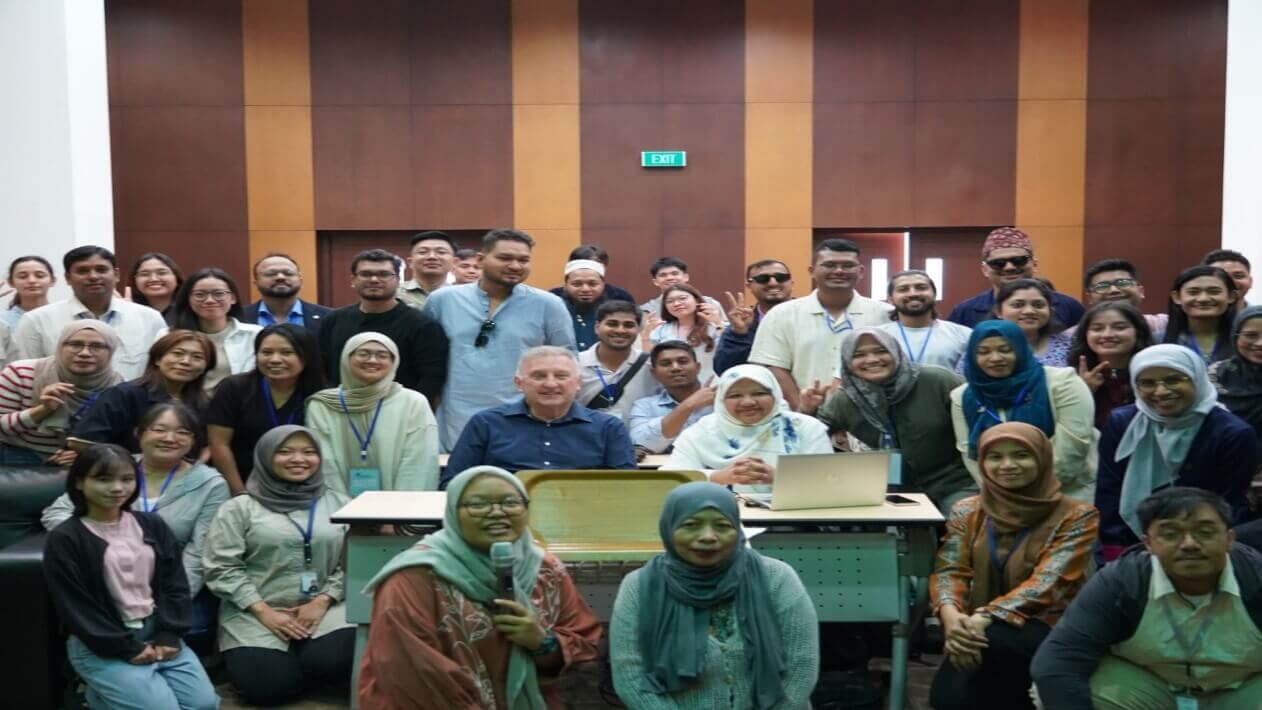
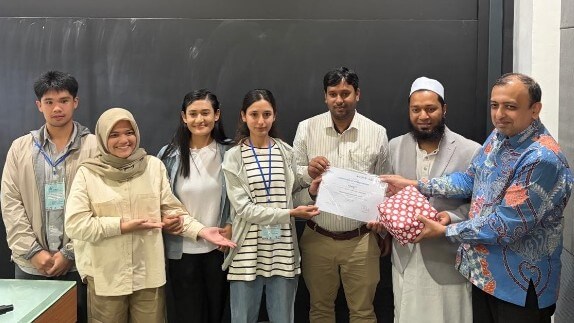
Furthermore, two Bangladeshi participants with their group received the prestigious Best Group Presentation Award at the final presentation of this International Summer Course 2026, reflecting the high quality of their research, professional presentation skills, and academic excellence. These achievements highlighted the growing contribution of Bangladeshi students and professionals to regional WASH research and humanitarian innovation.
The closing ceremony featured an inspiring address by Prof. Dr. Tanvir Ahmed, Regional Director of GSGS RH SSEA and Professor of Civil Engineering, BUET, Bangladesh. Reflecting on the key achievements of the Summer Course, he emphasized that the increasing frequency and intensity of climate-induced disasters demand a new generation of WASH professionals equipped not only with sound technical expertise but also with innovation, leadership, adaptability, and practical field experience.
Prof. Ahmed highlighted that humanitarian WASH extends far beyond the provision of infrastructure. Rather, it is fundamentally about safeguarding human dignity, public health, gender equality, social inclusion, and environmental sustainability. He encouraged participants to continue strengthening regional partnerships, embracing interdisciplinary collaboration, and translating scientific knowledge into practical solutions that improve the lives of vulnerable communities. Stressing the urgent need for highly skilled WASH professionals worldwide, he urged participants to remain committed to research, innovation, and humanitarian service.